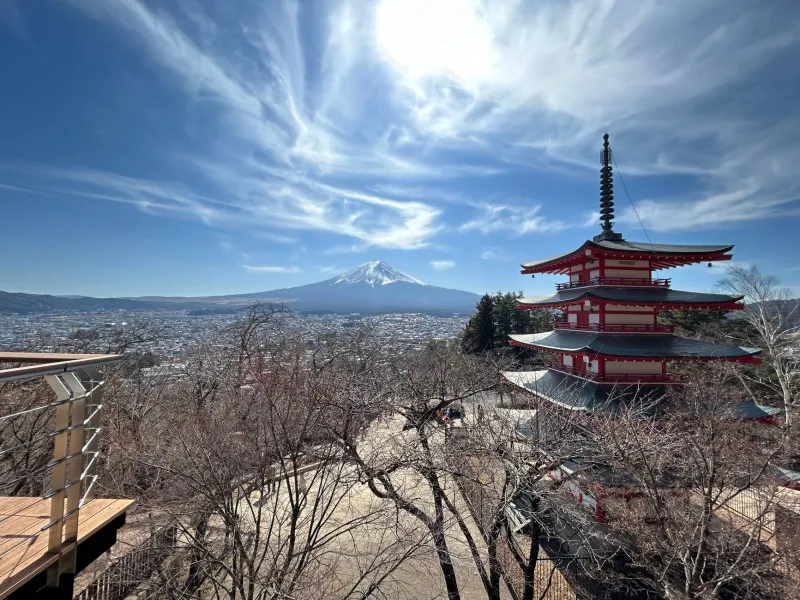
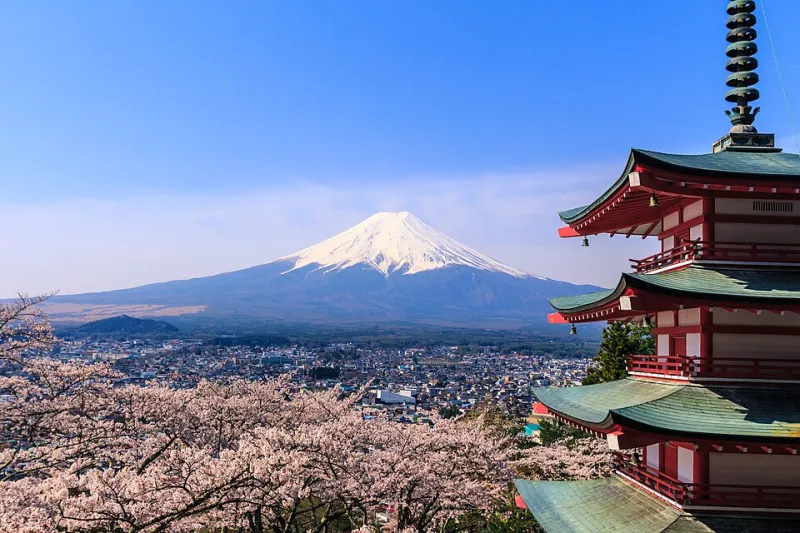
Not All Blossoms Are Created Equal: The Science Behind Why Arakurayama Hits Harder
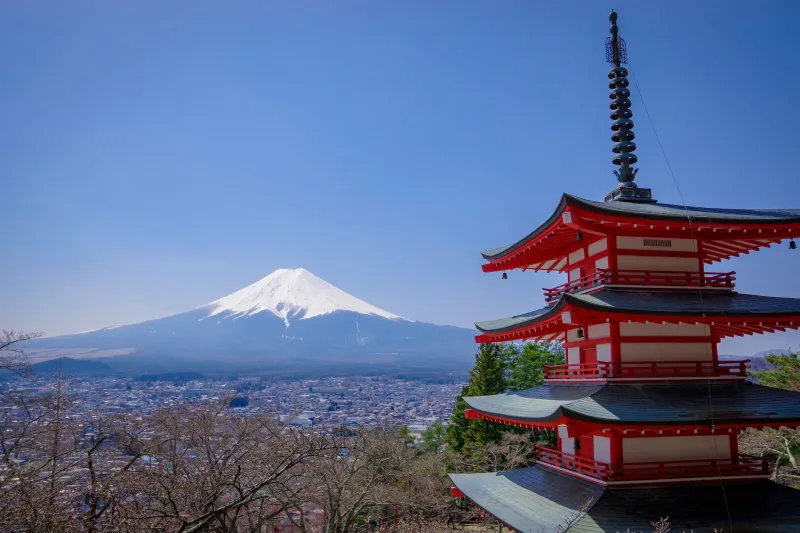
Let's be honest. When most Americans picture Japanese cherry blossoms, they're picturing Kyoto. Maybe the Philosopher's Path, maybe Maruyama Park, maybe a postcard they saved on Pinterest three years ago. Tokyo gets its share of the spotlight too — Ueno Park, Shinjuku Gyoen, the whole spectacle.
But spend any time talking to serious sakura chasers — the people who've done this more than once, who plan trips around bloom forecasts the way sports fans plan around playoff schedules — and Arakurayama keeps coming up. Not as a runner-up. As something different entirely.
So what's actually going on here?
The Microclimate Nobody Talks About
Arakurayama sits in Yamanashi Prefecture, tucked between the Southern Alps and Mount Fuji's imposing shadow. That geography isn't just scenic — it creates a microclimate that behaves differently from the coastal lowlands where most of Japan's famous sakura spots are located.
The mountain sits at an elevation that keeps nighttime temperatures cooler for longer into spring. That matters more than most people realize. Cherry blossoms — specifically the Somei Yoshino variety that dominates Japanese sakura culture — open faster when temperatures spike and slow down when nights stay cold. At Arakurayama, that cool-warm-cool rhythm extends the bloom window in a way that flatter, urban sites simply can't replicate.
Local botanists in the region have noted that the bloom cycle at Chureito Pagoda — the iconic five-story structure that makes Arakurayama arguably the most photographed sakura spot on earth — tends to lag three to five days behind central Tokyo. That lag isn't a flaw. It's an advantage. Visitors who've missed peak bloom in the capital can often catch it at Arakurayama. And visitors who arrive at Arakurayama at the right moment often find blossoms that haven't been battered by the wind and rain that frequently ends urban blooms early.
Why the Color Looks Different Here
This is the part that sounds like people are being dramatic until you actually go.
Multiple visitors — including photographers who shoot sakura across Japan every single year — consistently report that the blossoms at Arakurayama appear more vivid, almost luminous, compared to what they've seen elsewhere. There's a reason for that too.
The combination of elevation, humidity patterns, and the particular light quality at the base of a major mountain range creates conditions where petals retain moisture longer. A hydrated petal reflects light differently than a dry one. The pinks look more saturated. The whites look brighter. And when you layer that visual intensity against the backdrop of Mount Fuji on a clear day, the contrast is almost overwhelming.
It's not a trick of memory or nostalgia. It's physics.
The Emotional Resonance Factor
Here's where things get a little harder to quantify, but no less real.
Arakurayama isn't a park. It's a mountain you have to climb — 398 steps up to Chureito Pagoda, to be exact. That climb changes the experience in ways that sitting on a picnic blanket in Ueno Park simply doesn't. You earn the view. Your heart rate is up. You're breathing harder. And then you turn around and see the blossoms framing Fuji-san against the sky, and your nervous system responds to that in a way it wouldn't if you'd just strolled up to it.
Sports scientists and psychologists have documented the way physical exertion primes the brain for emotional intensity. You're more present, more alert, more open to awe when your body has been working. Arakurayama, almost by accident of geography, delivers that setup every single time.
Kyoto is beautiful. Nobody's arguing otherwise. But Kyoto's famous sakura spots are largely flat, easily accessible, and — during peak season — packed shoulder-to-shoulder with tourists. The sensory overload of crowds competes with the sensory experience of the blossoms. At Arakurayama, the climb filters the crowd. The people standing next to you at the top all worked for it. That shared effort creates a different kind of atmosphere.
What Repeat Visitors Actually Say
Talk to people who've done both — the classic Kyoto circuit and Arakurayama — and you hear variations of the same thing. Kyoto is what they expected Japan to look like. Arakurayama is what they didn't know they were looking for.
There's something about the scale of it. The mountain behind you, the pagoda beside you, Fuji in front of you, and blossoms everywhere in between. It's not subtle. It doesn't ask you to be in the right mood or bring the right context. It just hits.
One photographer who's made the trip four times described it this way: "Every other sakura spot I've been to, I'm looking at the blossoms. At Arakurayama, I feel like the blossoms are looking back."
That's not science. But it's not nothing, either.
The Practical Upshot
If you're planning a Japan trip and trying to decide where to center your sakura experience, the honest answer is that Arakurayama and the famous urban spots aren't really in competition. They're different categories of experience.
The parks of Kyoto and Tokyo offer accessibility, amenities, and a certain kind of refined beauty. Arakurayama offers something rawer, more physical, more unexpectedly emotional — and backed by a microclimate that gives the blossoms themselves a longer, more vivid window than almost anywhere else in the country.
The bloom here doesn't just happen to you. It meets you halfway. And that, more than anything, is probably why people keep coming back.