How to Actually Belong at Arakurayama: The Unspoken Rules That Make the Difference
Photo: Niek Beck, CC BY 2.0, via Wikimedia Commons
Every tourism board has a version of the etiquette list. Don't litter. Respect the space. Follow trail markers. These are fine as starting points, but they're also the floor, not the ceiling. At Arakurayama, where the combination of natural beauty and cultural depth draws visitors from all over the world, the difference between being a tourist and being a respectful presence is a lot more nuanced than any official sign will tell you.
This guide is for Americans who want to show up well — not just for the photos, but for the experience and for the community that calls this mountain home.
Start With the Noise Baseline
One of the first things visitors notice at Arakurayama — especially those arriving from cities like New York, Chicago, or LA — is how quiet it is relative to the number of people present. That quiet is not accidental. It's maintained collectively, almost instinctively, by Japanese visitors who understand that the space calls for a certain register.
This doesn't mean silence. Conversation is fine. Laughter is fine. But there's a volume ceiling that most Americans aren't used to observing in public spaces, and it's worth calibrating before you arrive. Leave the Bluetooth speaker in the hotel room. Keep phone calls brief and step aside from the trail if you need to take one. And if you're traveling with a group, notice when your collective energy is starting to dominate the atmosphere around you — and dial it back.
The quiet at Arakurayama is part of what makes the experience work. Protecting it is a form of respect, both for other visitors and for the place itself.
The Photography Question
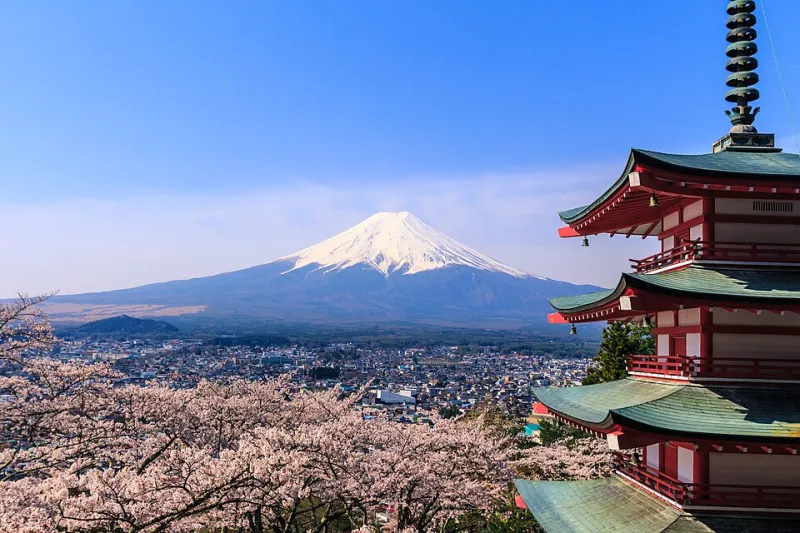
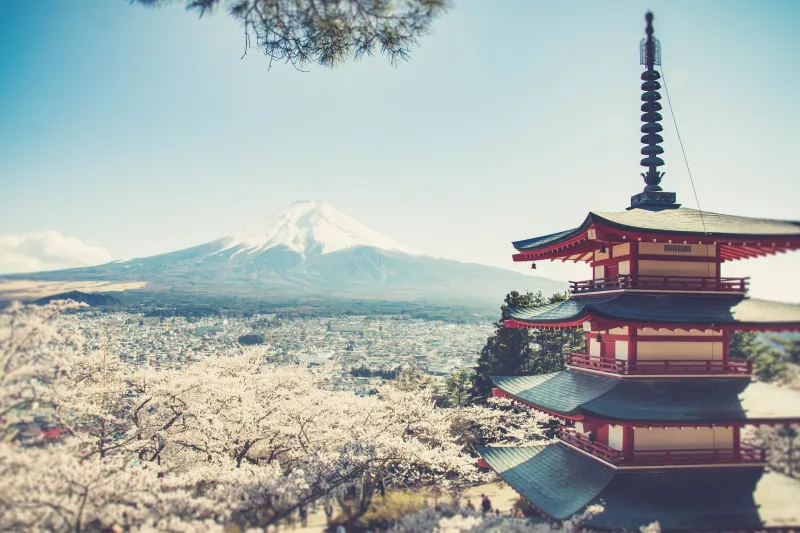
Let's be honest: most people visiting Arakurayama during peak bloom have a camera in their hand or their pocket, and there's nothing wrong with that. The views from the Chureito Pagoda staircase are genuinely stunning, and capturing them is a completely reasonable impulse.
But there are a few photography norms worth knowing before you start framing shots.
First, be aware of other people's frames. During busy periods, the viewpoints get crowded, and it's easy to walk into someone else's carefully composed shot without realizing it. A quick glance before you move through a crowded viewpoint area goes a long way.
Second — and this one matters more than people realize — avoid photographing strangers without their awareness, particularly locals who are simply going about their visit. Japanese culture places a high value on personal privacy in public spaces. The couple having a quiet moment under a sakura tree is not a prop for your travel content.
Third, drone use at Arakurayama is restricted and in some areas prohibited. Check current regulations before your trip and don't assume that what was allowed last year is still allowed now.
How to Move on the Trail
The path up to Chureito Pagoda involves 398 stone steps, and during peak bloom, traffic on those steps goes both ways. The general convention is to keep right and let descending visitors pass — similar to trail etiquette in US national parks, but observed more consistently here.
If you need to stop for a photo or to catch your breath (those steps are no joke), pull to the side rather than stopping mid-staircase. During peak season, the flow of people is constant, and a bottleneck at the wrong point on the stairs creates a cascade of inconvenience behind you.
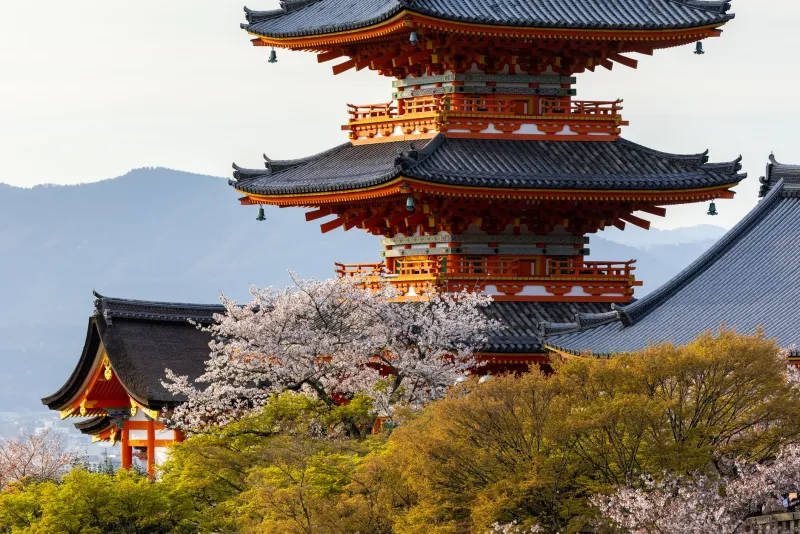
Also worth noting: the grounds around the pagoda and the Arakura Sengen Shrine are sacred spaces, not just scenic overlooks. Move through them with the same awareness you'd bring to any place of worship. That means staying on designated paths, not climbing on structures for a better angle, and keeping voices at a respectful level near the shrine buildings.
Timing as Courtesy
One of the most underappreciated forms of etiquette at Arakurayama is simply when you choose to visit. Peak bloom brings significant crowds, and while those crowds are a natural part of the experience, you can reduce your footprint on the space by timing your visit strategically.
Early morning — before 8am — is when the mountain is at its most atmospheric and least congested. The light is better for photography, the air is cooler, and the experience of standing at the viewpoint with a handful of other visitors rather than a wall of people is qualitatively different. It requires getting up early and possibly sacrificing a hotel breakfast, but the trade-off is almost always worth it.
Weekday visits are also significantly quieter than weekends, particularly for domestic Japanese tourists who make up a large portion of the crowd. If your schedule allows any flexibility, a Tuesday or Wednesday morning is a fundamentally different experience than a Saturday afternoon.
What "Being Present" Actually Means Here
This one is harder to codify, but it's the most important point in this guide. Arakurayama rewards the visitors who slow down enough to receive what the place is offering — not just visually, but in terms of atmosphere, texture, and feeling.
That means putting your phone down for stretches of the visit, not just to be mindful in a vague sense, but because the experience of the mountain is genuinely richer when you're not mediating it through a screen. It means sitting on a step and watching petals fall rather than moving immediately to the next viewpoint. It means noticing the smell of the air and the sound of the wind through the trees.
Japanese visitors, particularly older ones, tend to model this instinctively. Watch how they move through the space — unhurried, observant, often quiet — and let that set the tone for your own visit.
Arakurayama doesn't ask much of its visitors. But what it does ask — presence, consideration, and a willingness to move at the mountain's pace rather than your own — makes the entire experience better, for you and for everyone around you.