Three Days, One Mountain, Zero Regrets: The Compressed Arakurayama Itinerary That Actually Works
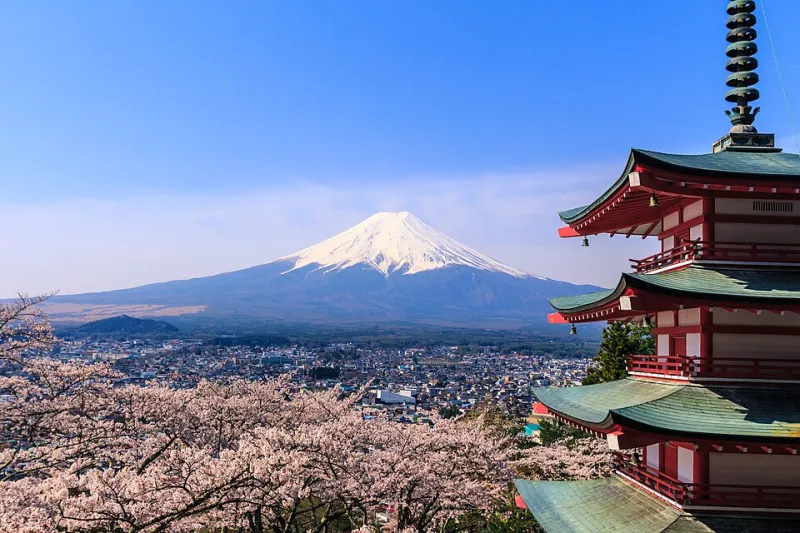
Photo: https://www.flickr.com/photos/reggiepen/, CC BY 2.0, via Wikimedia Commons
Most travel content about Arakurayama assumes you have the luxury of time — a two-week Japan itinerary with flexible dates and the ability to wait out a slow bloom. That's a beautiful trip, and if you can swing it, you should. But it's not the reality for most working Americans, especially those juggling PTO limits, school schedules, or the kind of job that doesn't pause gracefully for international travel.
This guide is for the other group: the people who've been watching the bloom forecast obsessively, who've already done the flight math three times, and who are trying to figure out whether 72 hours is actually enough. It is. Here's how to make it count.
Before You Book: The Timing Calculus
The most important decision in a short Arakurayama trip isn't which hotel to book — it's when to go. Peak bloom at Arakurayama typically falls in late March to mid-April, but the exact window shifts by several days each year depending on winter temperatures. The Japan Meteorological Corporation publishes official bloom forecasts, and dedicated sakura tracking sites update daily during the season.
For a 72-hour window, you're aiming to arrive on or just before peak bloom ("mankai" in Japanese, meaning full bloom), which usually lasts five to seven days. If you arrive two days before peak, your last full day there will likely be at maximum flower density. That's the sweet spot.
Flight-wise, a Thursday evening departure from the US West Coast gets you into Tokyo Friday evening Japan time, giving you Saturday and Sunday as your full days at Arakurayama before a Monday return. From the East Coast, the timing shifts slightly, but the same general logic applies. The goal is to land with at least one full night of rest before your first mountain morning.
Day One: Arrive, Orient, and Resist the Urge to Rush
You'll be tired when you land. Acknowledge that and plan for it. The first evening is not for sightseeing — it's for getting from Tokyo to Fujiyoshida (roughly 90 minutes by train and bus from Shinjuku Station via the Fujikyuko Line) and settling in.
Book your accommodation in Fujiyoshida or nearby Fujikawaguchiko rather than Tokyo. Staying close to the mountain eliminates a long morning commute on your most important days and gives you the option of an early start without a brutal pre-dawn train ride.
If you arrive with any energy to spare, a gentle evening walk around Fujiyoshida — including a look at the Kitaguchi Hongu Fuji Sengen Shrine — is a good way to calibrate your body to the environment without overdoing it on day one. Eat something, hydrate aggressively, and get to bed early.
Day Two: The Main Event
Set your alarm for 5:30am. This is non-negotiable on your primary Arakurayama day.
The walk to Arakurayama Sengen Park and the base of the Chureito Pagoda steps takes about 15-20 minutes from most Fujiyoshida accommodations. You want to begin your ascent by 6:15am at the latest. At this hour, the light is soft and directional, the crowds are thin, and the atmosphere at the top is as close to meditative as it gets during peak season.
The 398 steps to Chureito Pagoda will take most people 10-15 minutes at a steady pace. Take them slowly — not just because of the climb, but because the view unfolds gradually as you ascend and each landing offers a different perspective on the pagoda and the cherry trees below.
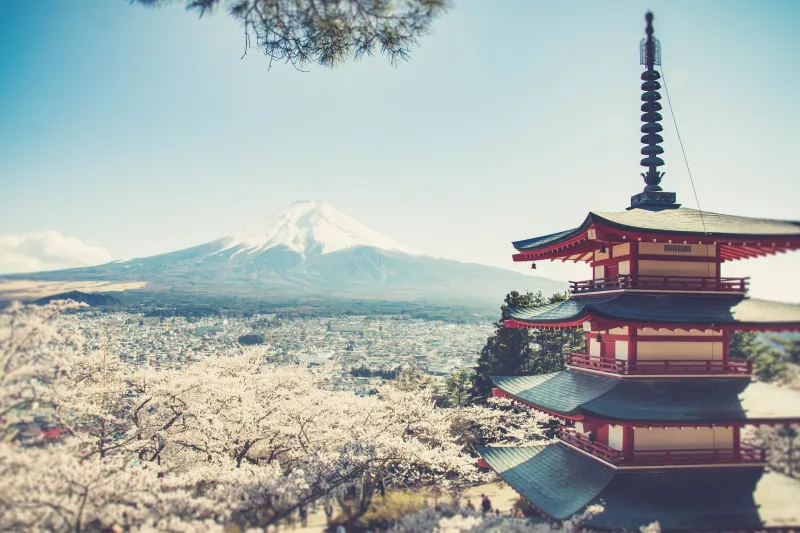
At the top, give yourself at least 45 minutes. Sit if you can find a spot. Watch the light change. Let the view settle rather than immediately reaching for your phone. The combination of the pagoda, the sakura, and Mount Fuji in the background is one of the most photographed scenes in Japan for good reason — but it's also one of the most genuinely moving, and that part requires presence, not just a camera.
By 8:30am, the crowds will begin to build noticeably. This is your signal to descend and shift to the park grounds below, where the sakura trees along the pathways offer a different kind of beauty — lower, closer, and easier to experience without jostling for space.
Spend the rest of the morning in the park, then take the afternoon at a slower pace. Lunch in Fujiyoshida. A rest at the hotel. An optional evening return to the park after 5pm, when the light goes golden and many daytime visitors have left.
Day Three: Depth Over Distance
Resist the temptation to spend your final day chasing additional sights. The instinct to maximize a short trip by adding destinations is understandable, but it works against the kind of experience Arakurayama actually delivers.
Instead, use day three for a second, slower visit to the mountain — this time without an agenda. Walk a different section of the park. Spend time at the Arakura Sengen Shrine. Notice what you missed when you were focused on reaching the pagoda. The mountain rewards second looks, and your brain will be less overwhelmed than it was on day two, which means you'll absorb more.
Plan your departure from Fujiyoshida for mid-afternoon to allow comfortable transit back to Tokyo for your evening or overnight flight. Don't cut this margin too close — Japanese trains are famously punctual, but cherry blossom season brings extra passenger volume and occasional platform crowding at popular stations.
The Mental Prep Nobody Mentions
Here's the thing about a 72-hour Arakurayama trip that most itinerary guides skip: it ends before you're ready for it to. That's not a failure of planning — it's a feature of the experience. The brevity makes everything sharper. The knowledge that you're leaving soon makes you pay attention in a way that open-ended travel sometimes doesn't.
Go in knowing that three days is enough to change how you see things, even if it's not enough to feel finished. That feeling of wanting more? It's the mountain doing its job. And it's usually what brings people back.