Why Americans Keep Spending $4,000 to See Cherry Blossoms — And Why That Math Actually Makes Sense
Let's do the math nobody wants to do out loud.
A round-trip flight from the US to Tokyo: $900 to $1,400, depending on where you're departing from and how far in advance you book. A week of accommodation near Arakurayama in Yamanashi Prefecture during peak sakura season: $150 to $300 per night, if you're not staying at a budget hostel. Food, trains, entrance fees, the inevitable purchases you didn't plan for: another $500 to $800 easily. Add it up and a solid Arakurayama cherry blossom trip runs $3,500 to $5,000 for most American travelers going solo, more for couples or families.
Now consider the alternative. The National Mall in Washington D.C. has roughly 3,700 cherry trees, planted as a gift from Japan over a century ago. The Tidal Basin bloom is legitimately beautiful. It's free. You can fly to D.C. from most American cities for under $300 round trip. The whole trip — flights, a hotel, meals — comes in well under $1,000.
So why are tens of thousands of Americans choosing the $4,000 option?
The easy answer is that they're not thinking clearly, or they've been seduced by Instagram, or they just have money to burn. But that answer is wrong. The people making this trip are, by and large, thoughtful about it. And what they'll tell you — once you get past the initial "I know it sounds crazy" — is that the comparison itself is the mistake.
What the Price-Tag Comparison Gets Wrong
Comparing Arakurayama to the Tidal Basin is a little like comparing a live concert to a really good recording of that same concert. Both involve the same music. One costs significantly more. And if all you care about is hearing the notes, the recording is clearly the rational choice.
But people who go to live concerts aren't confused about what they're buying. They're buying the room, the crowd, the electricity of being in the same physical space as the thing. The recording doesn't have that. It's not a worse version of the concert — it's a different category of experience entirely.
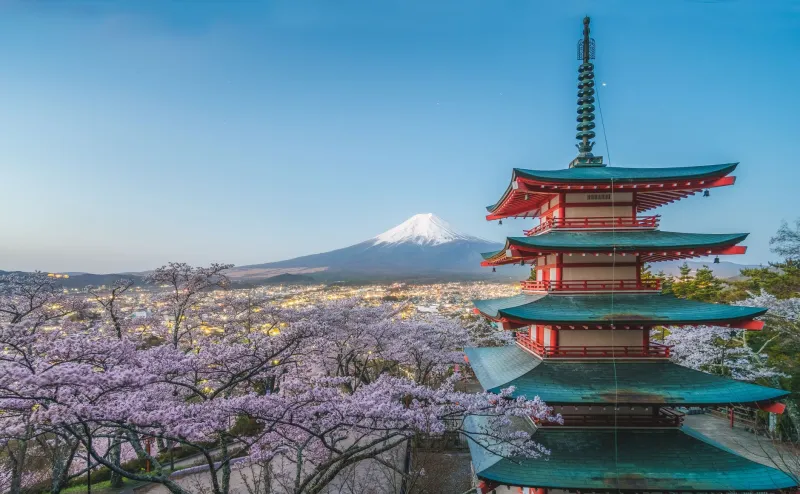
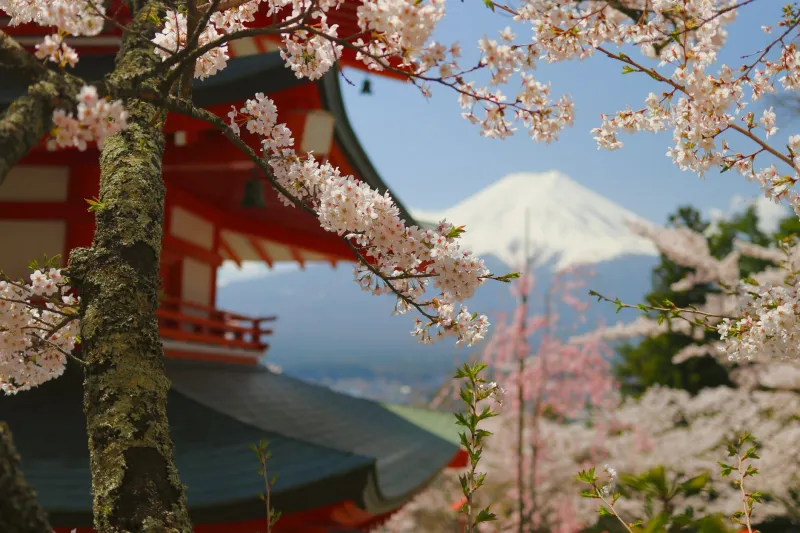
Arakurayama is like that. The cherry blossoms are the same species. The pink is the same pink. But the context — a mountain you have to climb, a 15th-century pagoda beside you, Mount Fuji filling the horizon — is not available anywhere else on earth. You can't get that context in D.C. You can't get it in San Jose's Japantown or at the Brooklyn Botanic Garden's annual sakura festival. Those are beautiful things. They're just not this thing.
The Specificity Premium
There's a concept in travel psychology sometimes called the specificity premium — the added value people assign to experiences that can only happen in one place. It's why people pay to see the actual Mona Lisa when they could look at a high-resolution digital version for free. It's why people fly to Iceland for the Northern Lights instead of watching livestreams of them on YouTube.
The experience of standing at Chureito Pagoda with Fuji-san behind you and blossoms in every direction is maximally specific. It cannot be replicated, approximated, or streamed. The specificity is the point. And for a certain kind of traveler — one who's chasing genuine, unrepeatable experience rather than comfortable familiarity — that specificity justifies a remarkable amount of financial inconvenience.
Americans who make this trip tend to describe it not as a vacation but as something closer to a pilgrimage. That word keeps coming up unprompted. And pilgrimages, historically, have never been cheap. The cost is partly what makes them meaningful.
What Arakurayama Delivers That No Domestic Alternative Can
Beyond the view itself — which, yes, is extraordinary — Arakurayama delivers something harder to quantify: the experience of being genuinely outside your ordinary life.
Japan is far enough, different enough, and demanding enough to require full presence in a way that a weekend trip to D.C. simply doesn't. You can't be half-checked-in at Arakurayama. The language is different. The food is different. The transportation system is different. The mountain requires physical effort. All of that friction — which sounds like a downside — actually forces the kind of attention that makes experiences stick.
Travel researchers have documented for years that novel, effortful experiences form stronger memories than easy, familiar ones. The brain encodes things differently when it has to work to process them. An Arakurayama trip, almost by design, checks every box for a high-encoding experience: novelty, physical challenge, emotional intensity, cultural unfamiliarity. The Tidal Basin, lovely as it is, is probably not going to feel transformative to someone who lives within driving distance.
The Regret Calculation
Here's the question that tends to close the debate for most people who are on the fence: which regret is worse?
Regret over spending money is real but typically fades. Regret over not going — over the trip you talked yourself out of, the experience you decided wasn't worth it — tends to compound. People remember what they didn't do longer and more painfully than what they spent.
The Americans who've made the Arakurayama trip consistently report not just satisfaction but a kind of clarity about the decision in retrospect. The money felt significant before the trip. Once they were there — standing on those 398 steps with blossoms and Fuji in the same frame — the financial math stopped mattering entirely. Not because they forgot what they spent, but because what they received made the comparison feel irrelevant.
The Honest Answer
Is Arakurayama worth $4,000? That's genuinely the wrong question, and the people who've gone will tell you so.
The right question is: what are you actually trying to buy? If the answer is cherry blossoms, D.C. is a perfectly reasonable choice. If the answer is a specific, unrepeatable, full-body experience that you will remember for the rest of your life — something that resets your sense of what travel can feel like — then $4,000 isn't the price of cherry blossoms.
It's the price of something that doesn't have a cheaper version.