Time It Right: What Japanese Seasonal Wisdom Can Teach Americans About Visiting Arakurayama
Photo: W.carter, CC0, via Wikimedia Commons
Most American travelers plan their Arakurayama trip the same way they'd plan any vacation: pick a week that works for work, check the flight prices, book the hotel. Then they cross their fingers about the cherry blossoms.
Japanese locals don't approach it this way. They never have. And understanding the difference—really understanding it—might be the single most useful thing you can do before booking your spring trip to the mountain.
A Culture Built Around Seasonal Precision
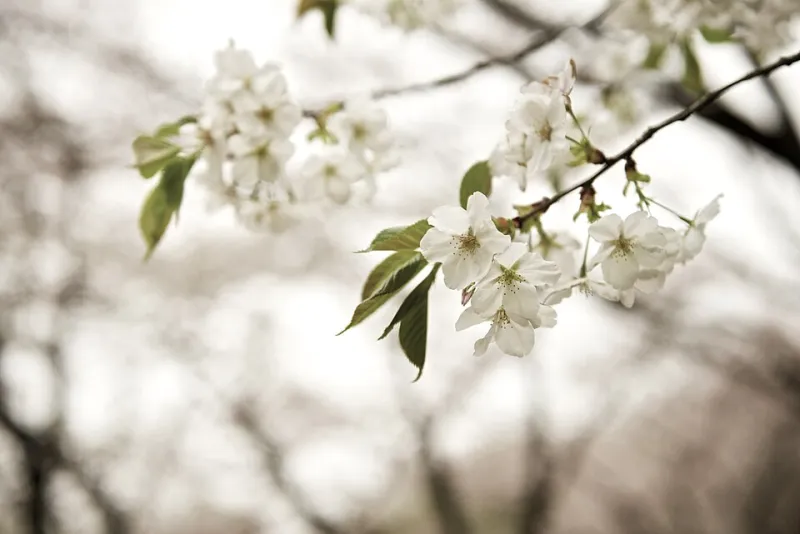
Japan has a concept called kigo: seasonal reference words embedded in poetry, literature, and everyday speech that signal not just a time of year but a specific atmospheric and emotional quality. Cherry blossoms (sakura) are perhaps the most famous kigo in existence, carrying centuries of layered meaning about beauty, impermanence, and the particular ache of watching something gorgeous while knowing it won't last.
But kigo isn't just poetry. It reflects a cultural practice of paying close, sustained attention to seasonal transitions—noticing the exact moment when the quality of light shifts, when certain birds return, when the air carries a different smell. For Japanese people who grew up with this framework, predicting cherry blossom timing isn't really guesswork. It's the result of accumulated, embodied knowledge passed down through generations.
As an American visitor, you're not going to develop that overnight. But you can borrow some of the logic—and it'll serve you much better than just picking a week and hoping.
Understanding the Bloom Forecast (And Why It's More Science Than Magic)
Japan's meteorological agencies release official cherry blossom forecasts (sakura yoho) starting in late January each year. These aren't vague predictions—they're granular, location-specific projections based on temperature accumulation models that track how much warmth the trees have absorbed since winter dormancy.
The key metric is something called the 600-degree rule: cherry trees tend to bloom when the cumulative daily average temperatures since February 1st reach approximately 600 degrees Celsius. It sounds technical, but the practical takeaway is simple: warmer winters mean earlier blooms, cooler winters push things later. In recent years, peak bloom at Arakurayama has shifted earlier due to warming trends—something worth factoring in if you're working from outdated travel advice.
For Arakurayama specifically, the Chureito Pagoda area typically sees peak bloom in late March to mid-April, but that window can shift by a week or more in either direction. Checking the Japan Meteorological Corporation's forecast (available in English) in the weeks before your trip is genuinely useful. So is following Japanese local weather accounts on social media, where real-time updates during bloom season can be remarkably precise.
The Concept of Yohaku No Bi—And Why It Should Change How You Think About Timing
Here's where it gets interesting for the solo traveler trying to have a genuine experience rather than just a crowded one.
Yohaku no bi is a Japanese aesthetic concept that translates roughly as "the beauty of empty space"—the idea that what's left out, left unsaid, or left uncrowded is often where the real meaning lives. In visual art, it's the unpainted portion of a canvas. In travel, it might be the shoulder of the bloom season rather than the peak.
Japanese hanami veterans often choose to visit cherry blossom sites at the very beginning of bloom (咲き始め, saki-hajime) or in the final days when petals are falling (花吹雪, hanafubuki—literally "flower blizzard"). These moments are considered by many to be more emotionally resonant than the peak, and they come with dramatically smaller crowds.
For Arakurayama, this translates into a concrete planning strategy: if you can visit when the trees are at 70-80% bloom rather than 100%, you'll likely find shorter lines at Chureito, more breathing room on the trails, and a quieter, more contemplative atmosphere throughout the mountain. The blossoms are still stunning. The light is arguably better for photography. And the experience feels less like a theme park and more like an actual place.
Reading the Local Signals
Beyond the official forecasts, Japanese locals use a range of informal seasonal markers to gauge bloom timing—and some of them are genuinely accessible to outside visitors.
Watch the plum trees. Plum (ume) blossoms precede cherry blossoms by roughly four to six weeks. If you're following news or social media from the Fujiyoshida area and you see reports of plum bloom, you can start counting forward. A strong, early plum bloom often signals an earlier-than-average cherry season.
Check the Yoshino cherry trees in your own backyard. The Somei Yoshino variety planted throughout Washington D.C. and other US cities blooms on a similar schedule to those in central Japan. If your local cherry trees are running early, Arakurayama's probably are too.
Use the Weathernews Sakura Navi app. It's available in English, crowd-sourced from Japanese locals, and updated in near real-time during bloom season. It's the closest thing to having a local contact on the ground.
Practical Timing Windows for American Visitors
Let's put all of this into something you can actually use when planning.
If you want peak bloom and can handle crowds: Aim for the last week of March through the first week of April. Book accommodation in Fujiyoshida at least three to four months in advance. Arrive at Chureito before 8 a.m. or after 4 p.m. for the best light and thinnest crowds.
If you want a quieter experience with strong blossoms: Target the window ten days before predicted peak. Trees will be at partial bloom, the mountain will be noticeably less crowded, and you'll have a much easier time lingering at viewpoints and on the trails.
If you're flexible and want the most atmospheric experience: Watch for hanafubuki conditions—falling petals, often in the week after peak bloom. The mountain is genuinely magical when petals are drifting through the air, and most day-trippers have already moved on.
A Different Way of Traveling
The deeper lesson from Japanese seasonal culture isn't really about logistics. It's about attention. Kigo and yohaku no bi are both, at their core, practices of noticing—of slowing down enough to perceive what's actually happening in the world around you rather than just moving through it.
Arakurayama rewards that kind of attention more than almost any destination in Japan. The mountain has layers: the famous pagoda view, yes, but also the older shrine paths, the upper forest trails, the quiet residential streets below, the way the light hits Fuji at different hours of the day. You only find those layers if you've given yourself enough time—and arrived at the right moment—to look.
Timing your visit well isn't just a logistical win. It's the first step toward experiencing the mountain the way it's meant to be experienced: with presence, patience, and a willingness to let what's actually there surprise you.