Arakurayama in Every Season: A Bloom-by-Bloom Guide to the Mountain's Year-Round Botanical Calendar
Photo: Tom Parker, Public domain, via Wikimedia Commons
The Mountain Has More Than One Season
Let's be honest — most American travelers plan their Japan trip around cherry blossoms. It's understandable. The sakura season is genuinely spectacular, and Arakurayama's combination of tiered hillside blossoms and the Chureito Pagoda makes it one of the most photographed spots in the country. But here's something the tourism posters don't tell you: if you shift your trip by even a few weeks in either direction, or visit during a completely different season, you'll find a mountain that's still very much worth the journey.
This guide is for the traveler who wants to understand Arakurayama across its full calendar year — whether you're planning a return visit, traveling off-season to avoid the crowds, or just curious about what the mountain looks like when the sakura are long gone.
Late Winter: Plum Blossoms and the First Signs of Life (February–Early March)
Before a single cherry blossom opens, the plum trees — ume in Japanese — are already doing their thing. Plum blossoms bloom several weeks ahead of sakura, typically peaking in the Fujiyoshida area around late February to early March depending on the year's temperatures.
Plum flowers are smaller and more fragrant than cherry blossoms, and they cling to their branches rather than forming the dramatic drooping clusters sakura are known for. The color palette leans deeper — dusty pinks, whites, and the occasional deep magenta. For visitors coming from the US, think of it like the difference between a dogwood and a redbud: both beautiful, but with completely different personalities.
Visiting in late February also means significantly thinner crowds and, if you time it right, a real chance of seeing snow on Mount Fuji's upper slopes while the plum trees are in color below. That contrast — white peak, pink blossoms, bare winter landscape — is striking in a way that the full-green, full-crowd April experience simply isn't.
Spring: The Sakura Window (Late March–Mid April)
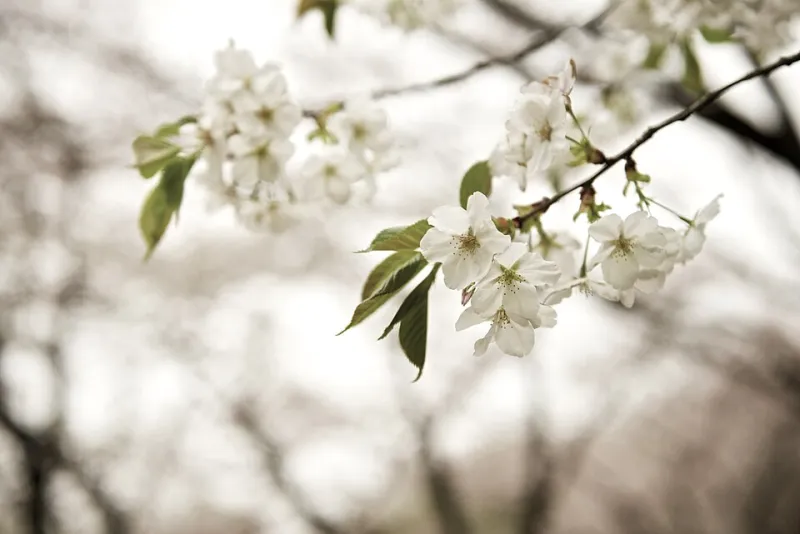
This is the main event, and it earns the attention it gets. Arakurayama's cherry blossom peak typically falls between late March and mid-April, though the exact timing shifts year to year based on winter temperatures. The mountain's elevation creates a slight delay compared to lower-lying spots in the region, which can actually work in your favor — if you've already seen the blossoms peak in Tokyo or Kyoto, Arakurayama may still be days away from its own peak when you arrive.
What makes this site botanically interesting beyond the sakura themselves is the layering effect. Different cherry varieties bloom at slightly different times, meaning the overall blossom season at Arakurayama spans two to three weeks rather than the narrow five-to-seven-day window you might experience at a single-variety planting. Early-blooming varieties kick things off, followed by the dominant Somei Yoshino, and then some of the later-blooming double-petal varieties wrap up the season.
If you're here for the botanical experience rather than the crowd experience, the tail end of bloom — when petals are falling like snow and the first green leaves are emerging — is genuinely one of the most beautiful stages of the cycle.
Late Spring and Early Summer: Wisteria, Azaleas, and Mountain Wildflowers (May–June)
Once the cherry blossoms have finished, the mountain doesn't go quiet. May brings a wave of azaleas (tsutsuji), which bloom in clusters of vivid pink, red, and white across the hillside. Wisteria (fuji) — which shares its name with nearby Mount Fuji — drapes over trellises and older structures in cascading purple clusters that smell extraordinary in the warm spring air.
By June, the surrounding forests and meadows start producing a broader range of mountain wildflowers. Japan's native flora includes species that will feel familiar to American hikers — wild violets, clover, and various members of the daisy family — alongside plants you won't find back home. The greenery at this time of year is intensely saturated, the kind of deep, vivid green that only happens when rainfall is high and temperatures are climbing.
June also brings the beginning of hydrangea (ajisai) season, with blue and purple blooms that peak through early July. The combination of hydrangeas and the misty, rainy conditions of Japan's early summer creates an atmosphere that's moody and atmospheric in a way that's totally different from the bright, festive energy of sakura season.
Summer: Lotus, Sunflowers, and High Mountain Meadows (July–August)
Summer in the Fujiyoshida area is warm and humid, and the botanical calendar shifts toward the dramatic. Lotus flowers bloom in still water features and nearby ponds, opening in the early morning hours and closing by midday — if you want to see them at their best, you need to be an early riser. The lotus is deeply embedded in Japanese Buddhist culture, so seeing them near the mountain's temple structures carries a cultural resonance that goes beyond the visual.
The surrounding Fuji Five Lakes region, of which Arakurayama is a part, hosts sunflower fields and lavender farms that draw visitors throughout July and August. These aren't on the mountain itself, but they're part of the broader botanical landscape of the area and worth building into a summer itinerary.
Autumn: Foliage That Rivals New England (October–November)
American travelers who grew up chasing fall foliage in Vermont or the Smoky Mountains will find something genuinely familiar — and genuinely different — in Arakurayama's autumn. Japanese maple (momiji) foliage turns a red so vivid it almost looks artificial, and the mountain's mixed forest creates a patchwork of red, orange, and gold that frames the pagoda in a completely different palette than spring.
Foliage typically peaks in the Fujiyoshida area between late October and mid-November. The combination of autumn color and Mount Fuji's first seasonal snow cap is one of those sights that stops people in their tracks. If you can only visit Arakurayama twice, cherry blossom season and autumn foliage season are the two most visually dramatic windows.
Crowds are thinner than during sakura season, the air is crisp and clear, and the light in autumn has a warmth that makes every photograph look like it was shot through a filter.
Winter: Stillness, Snow, and Structural Beauty (December–January)
Winter is Arakurayama's quietest season, and that's exactly its appeal. Without foliage or blossoms, the mountain's structure becomes visible — the geometry of bare branches, the weight of snow on pagoda rooftops, the stark silhouette of the staircase against a gray sky. For photographers and visitors who appreciate a more contemplative experience, winter offers Arakurayama in its most elemental form.
Snow on the steps and surrounding grounds, with Mount Fuji crystal-clear in cold winter air, is one of the mountain's most underrated views. You'll likely have it almost entirely to yourself.
Planning Your Visit Around the Botanical Calendar
The honest takeaway here is that Arakurayama doesn't have an "off season" — it has different seasons, each with its own character. For first-time visitors, cherry blossom season remains the obvious choice. But if you've been before, or if you're the kind of traveler who prefers fewer crowds and a more personal experience, every other month of the year offers something genuine.
The mountain is always blooming something. You just have to know when to look.