Week by Week: Your Full Seasonal Roadmap to Arakurayama's Cherry Blossoms
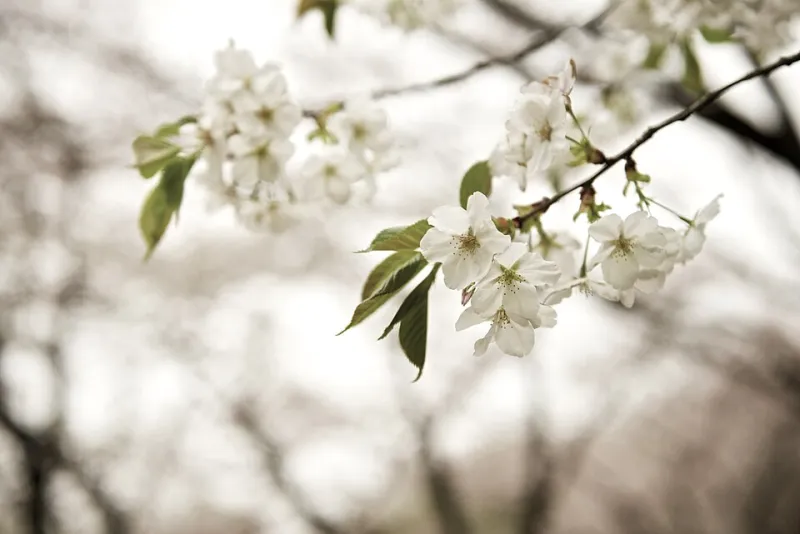
Photo: ajari, CC BY 2.0, via Wikimedia Commons
Why Timing Your Arakurayama Trip Actually Matters
Let's be real: booking a flight from the US to Japan is not a casual weekend decision. You're looking at 13 to 14 hours in the air, significant time zone adjustment, and a trip cost that adds up fast once you factor in accommodation and transportation. The last thing you want is to arrive at Arakurayama and find that the cherry blossoms peaked three days before you landed—or that you're a week too early and the trees are still bare.
The tricky part? Cherry blossom timing isn't fixed. It shifts by days or even weeks from year to year depending on winter temperatures, spring rainfall, and a host of other variables that even Japan's meteorological agencies spend considerable energy predicting. What this guide gives you is a reliable framework—a sense of what each phase of the season looks and feels like, what to realistically expect, and how to build flexibility into your trip so you're not completely at the mercy of the calendar.
Understanding How Cherry Blossom Season Works
Before diving into the week-by-week breakdown, it helps to understand the basic mechanics of how sakura season unfolds. Cherry blossoms in Japan don't bloom all at once nationwide. The season travels northward and upward in elevation as temperatures rise—a progression tracked through what's called the sakura zensen, or cherry blossom front.
Arakurayama sits in Yamanashi Prefecture at a moderate elevation, which means it typically blooms slightly later than lower-altitude spots like Tokyo. This is actually good news for US travelers: if you miss peak bloom in the cities, Arakurayama may still be putting on a show. It's also worth knowing that "peak bloom" at Arakurayama doesn't mean a single perfect day—it's generally a window of five to ten days when the trees are at or near full flower, with the most photogenic conditions occurring in the middle of that window.
Late March: The Anticipation Phase
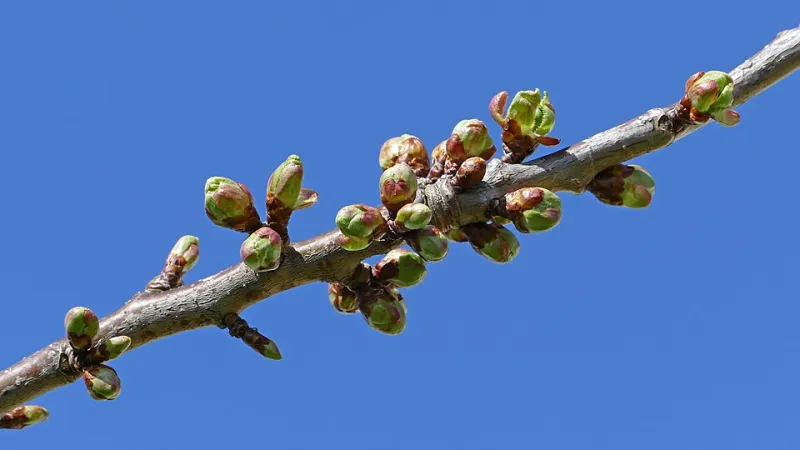
In most years, late March at Arakurayama is a time of building excitement rather than full bloom. You'll typically see the earliest-opening varieties—usually kawazu-zakura or other early-blooming cultivars planted in lower sections of the park—showing color before the main yoshino cherries have fully woken up.
If you're visiting in late March, temper your expectations for the mountain's most famous views, but don't write off the trip. The mountain has a quieter, more local feel during this phase. Crowds are lighter, accommodation is easier to find, and there's something genuinely lovely about watching a landscape on the edge of transformation. This is also when the mountain's plum blossoms may still be lingering, creating an overlap of early spring color that's easy to miss if you only visit during peak sakura season.
Best for: Budget travelers, people who prefer a quieter atmosphere, photographers interested in bud and early-bloom compositions.
Early April: When the Magic Starts
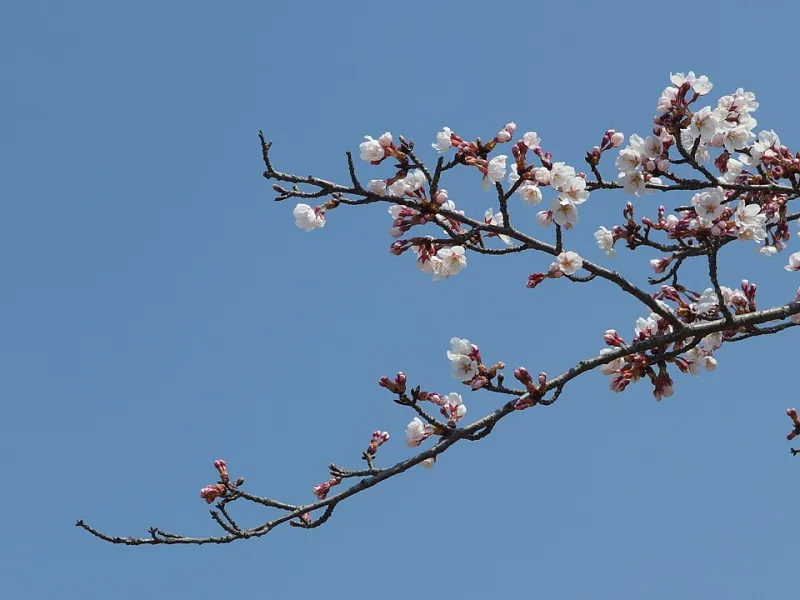
Early April is when Arakurayama starts to shift into high gear. Depending on the year, this is often when the yoshino cherry trees—the dominant variety on the mountain—begin opening in earnest. You'll go from seeing scattered blossoms to entire trees covered in soft white-pink flowers within just a few days.
This phase, roughly the first week of April in an average year, is a fantastic time to visit if you can manage it. The crowds are building but haven't yet hit their peak intensity. The light is still crisp and cool, which is flattering for photography. And the sense of arrival—that feeling of catching something just as it's becoming spectacular—is hard to replicate later in the season.
One thing to watch: early April mornings can still be quite cold at Arakurayama, with temperatures sometimes dipping into the low 40s Fahrenheit. Layer up, especially if you're planning to catch sunrise from the upper trails.
Best for: First-time visitors who want the full experience without maximum crowds, early-morning photographers.
Mid-April: The Peak
This is it. Mid-April, give or take a few days depending on the year, is when Arakurayama hits full bloom. The famous Chureito Pagoda view is at its most dramatic. The entire mountain seems to exhale pink and white. On a clear day with Fuji visible, it's the kind of scenery that makes you understand why people plan trips around this specific moment.
Here's the honest trade-off: peak bloom also means peak crowds. Weekends during this window are extremely busy. If you have any flexibility in your schedule, a midweek visit is significantly more pleasant. Arrive early—the trails and viewpoints fill up fast, and the best light for photography is in the morning anyway.
Weather is your biggest variable during peak bloom. A warm, sunny stretch will hold the blossoms open and keep Fuji visible. Rain, while not catastrophic, can accelerate petal fall and obscure the mountain. Keep an eye on the forecast in the week leading up to your visit and be ready to adjust your daily itinerary if needed.
Best for: Anyone who wants to see Arakurayama at its absolute showiest and doesn't mind a livelier atmosphere.
Late April: The Petal Fall
Late April brings what the Japanese call hanafubuki—literally "flower blizzard." As temperatures rise and blossom petals begin to fall, the air around the mountain fills with drifting pink and white flakes. It sounds poetic, and it genuinely is.
This phase is underrated among Western travelers who tend to fixate on peak bloom as the only goal. But petal fall has its own visual magic. The ground beneath the trees becomes a soft carpet of color. The remaining blossoms on the branches look more fragile and luminous against the background of bare branches starting to fill with new green leaves. It's a different kind of beautiful—one that carries a quiet, bittersweet quality that resonates deeply once you experience it in person.
Crowds thin out noticeably during this phase. Accommodation prices often drop. And the mountain itself starts to feel like it belongs to the people who live nearby rather than the global tourism machine.
Best for: Repeat visitors, photographers interested in texture and mood, travelers who prefer a relaxed pace.
Early May: The Green Season Begins
By early May, the cherry blossoms are done at Arakurayama. The trees are leafing out in fresh green, and the mountain takes on a completely different character—lush, quiet, and honestly quite beautiful in a way that has nothing to do with sakura. If you're already in Japan for Golden Week (Japan's major national holiday cluster in late April to early May), the mountain is worth visiting even without the blossoms, though expect crowds tied to the holiday itself.
Best for: Hikers interested in the trail experience independent of bloom season.
Building Your Trip Around the Calendar
A few practical notes for US travelers planning their timing:
- Book flights and accommodation early. Peak bloom dates aren't confirmed until a few weeks before they happen, but the most popular accommodation near Arakurayama sells out months in advance regardless. Book refundable options when possible.
- Follow the Japan Meteorological Corporation's sakura forecast. They release updated predictions starting in January each year and are generally quite accurate by early March.
- Build in a buffer. If your schedule allows, plan a four-to-five-day window in the region rather than a single-day visit. This gives you the flexibility to catch the best conditions without feeling like everything rides on one afternoon.
- Consider the full season, not just peak. As this calendar shows, every phase of Arakurayama's bloom season has something genuine to offer. The best trip isn't necessarily the one timed to the single most crowded weekend—it's the one that matches your pace, budget, and what you actually want to experience.
The bloom waits for no one, but with a little planning, you can make sure it waits for you.