Your Brain on Blossoms: The Surprising Science of What Arakurayama Does to You
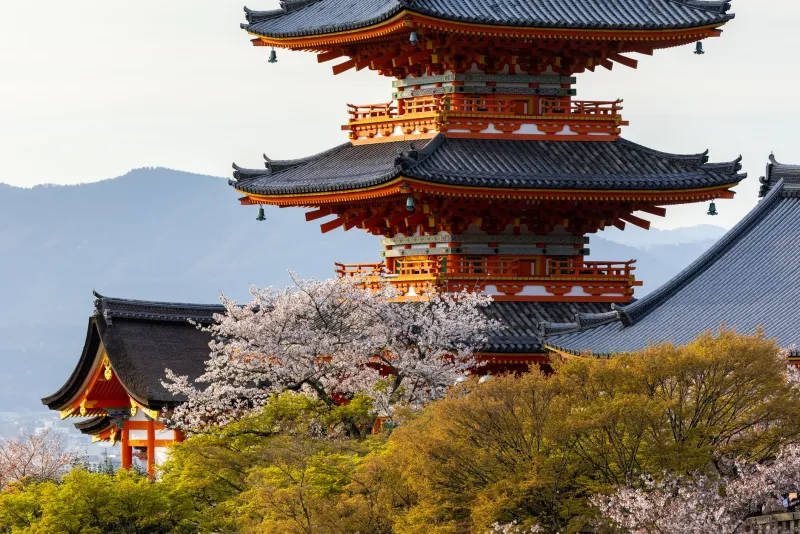
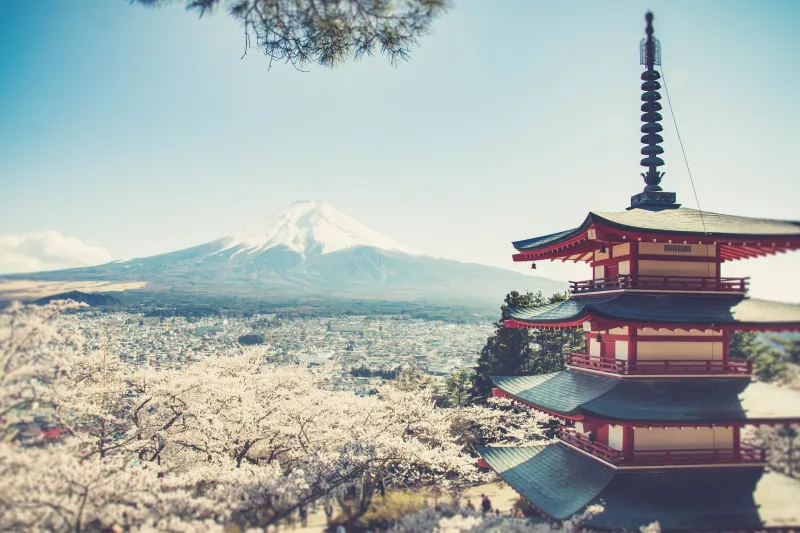
There's a moment most visitors describe the same way. You've climbed the stone steps, your legs are burning a little, and then the pagoda appears through a curtain of pink. You stop. Your shoulders drop. You exhale in a way you haven't in months. It feels like something just switched off inside you — and honestly, that's pretty close to what's actually happening.
The science behind what Arakurayama does to the human brain is catching up to what visitors have been reporting for decades. And it turns out your body is doing a lot more than just enjoying a pretty view.
The Dopamine Hit That No Gym Machine Replicates
When you see something visually rewarding — a sunset, a perfect meal, a highlight reel dunk — your brain releases dopamine. But not all dopamine hits are created equal. Research into what neuroscientists call "awe experiences" suggests that natural, large-scale beauty triggers a more sustained dopamine response than most everyday pleasures.
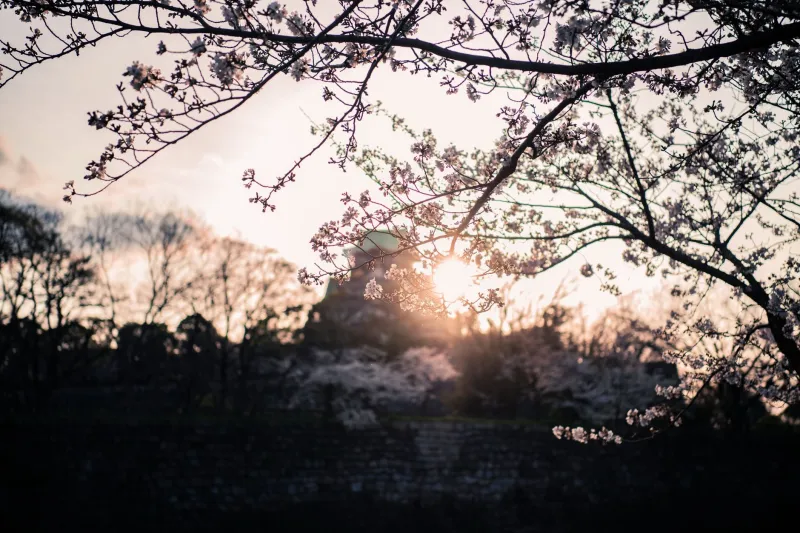
Cherry blossoms are particularly well-suited to this. The soft pink-white color palette sits in a range that human eyes process as calming rather than stimulating. The sheer volume of blooms — thousands of petals layered across an entire mountainside — creates what researchers describe as a "fractal visual pattern," the same kind of repeating geometry found in coastlines and forests that has been shown to reduce cortisol levels by up to 60 percent in some studies.
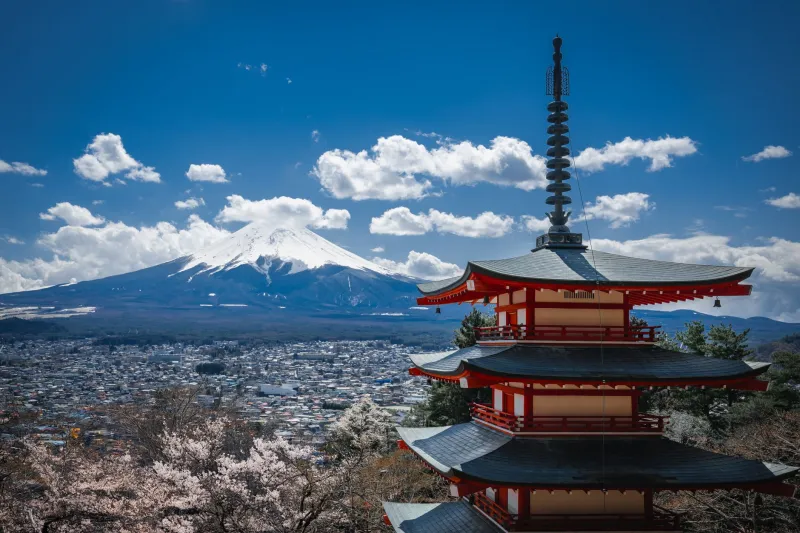
At Arakurayama, you're not looking at a single ornamental tree in a parking lot median. You're surrounded by it on all sides, with the iconic five-story pagoda anchoring the scene. The visual density is part of what makes it work on your nervous system differently than a botanical garden visit back home.
Elevation, Air Quality, and the Hidden Variables
Here's something most travel content skips over: Arakurayama sits at roughly 1,000 feet above the valley floor, and that elevation matters more than you might think.
At that height, particulate matter in the air drops significantly compared to urban environments. The forest surrounding the mountain releases phytoncides — antimicrobial compounds that trees emit as a kind of chemical defense. When humans inhale phytoncides, research consistently shows an increase in natural killer (NK) cell activity, the immune cells responsible for fighting off infections and abnormal cells. Studies conducted in Japanese forest environments found that a single two-hour forest walk elevated NK cell activity for up to 30 days afterward.
Your home gym, with its recycled air and rubber flooring off-gassing, is operating in a completely different biological league.
The combination of elevation, clean mountain air, and the specific microclimate around Arakurayama's forested slopes creates conditions your body likely hasn't experienced since the last time you were genuinely away from a city. That's not a marketing line. That's physiology.
Why Sakura Season Specifically Hits Different
The timing of peak bloom — typically late March through mid-April — aligns with a natural biological reset that humans have been responding to for thousands of years. Longer days mean increased serotonin production. Warmer temperatures after winter trigger physical energy. And the transience of cherry blossoms — the fact that they're only fully open for roughly one to two weeks — activates a psychological state researchers associate with heightened presence and attention.
The Japanese concept of mono no aware, often translated as "the bittersweet awareness of impermanence," isn't just poetic philosophy. It's a cognitive state that pulls you out of autopilot. When you know something is temporary and rare, your brain encodes the experience more deeply. That's why Arakurayama visits tend to stick with people in a way that a weekend in Vegas simply doesn't.
You're not just enjoying the view. Your hippocampus is working overtime to preserve it.
The Physical Payoff You Didn't Plan For
Getting to the best viewpoints at Arakurayama requires actual movement. The climb to the Chureito Pagoda involves roughly 400 steps, and the surrounding trails add more depending on how far you wander. That's not a brutal workout by any measure, but it's purposeful movement in a natural environment — and that combination is where the real magic happens.
Studies comparing treadmill walking to outdoor walking in natural settings consistently find lower perceived exertion, lower heart rate, and higher mood scores in outdoor groups, even when the physical workload is identical. Your brain simply doesn't register effort the same way when there's something worth looking at.
At peak bloom, you're essentially tricking your body into a workout it doesn't complain about — and then flooding the result with serotonin, dopamine, phytoncide exposure, and an awe response that lingers for days.
No monthly membership required.
What You Actually Can't Get at Home
American cities have done a decent job of planting ornamental cherry trees. Washington D.C.'s Tidal Basin is genuinely beautiful. But replicating the Arakurayama experience in a domestic setting runs into a few hard walls.
First, scale. The sheer visual immersion of a mountain covered in blooms — with layers of trees stretching across the hillside and the Southern Alps visible in the distance on clear days — is a stimulus your nervous system hasn't encountered before. Novel environments produce stronger neurological responses than familiar ones, regardless of how pretty the familiar setting is.
Second, cultural context. Being somewhere that has been a site of seasonal pilgrimage for centuries adds a layer of meaning that genuinely affects how your brain processes the experience. Humans are social animals, and knowing you're participating in something larger than your individual visit changes the emotional weight of the moment.
Third, the quiet. Even during busy bloom season, Arakurayama's mountain setting absorbs sound differently than an urban park. Lower ambient noise levels are directly linked to lower cortisol and blood pressure. It's a variable most people don't think to credit, but it's doing real work on your stress response the entire time you're there.
Your home gym will be there when you get back. But there's a solid neurological case for making sure Arakurayama gets there first.