No App Required: How Arakurayama Does What Every Wellness Retreat Promises But Can't Deliver
There's a particular kind of exhaustion that comes from trying to relax on purpose. You've probably felt it — lying on a yoga mat at a resort in Sedona or Tulum, phone face-down on a bamboo shelf, following a facilitator's instructions to breathe into your anxiety while mentally calculating whether you've justified the cost of the package. Wellness in America has become a performance, and we're all a little tired of performing it.
Arakurayama doesn't ask you to perform anything. It just makes certain things impossible — rushing, scrolling, half-paying attention — and in doing so, delivers something that three-day silent retreats have been trying to bottle for decades.
What the Mountain Actually Does to Your Body
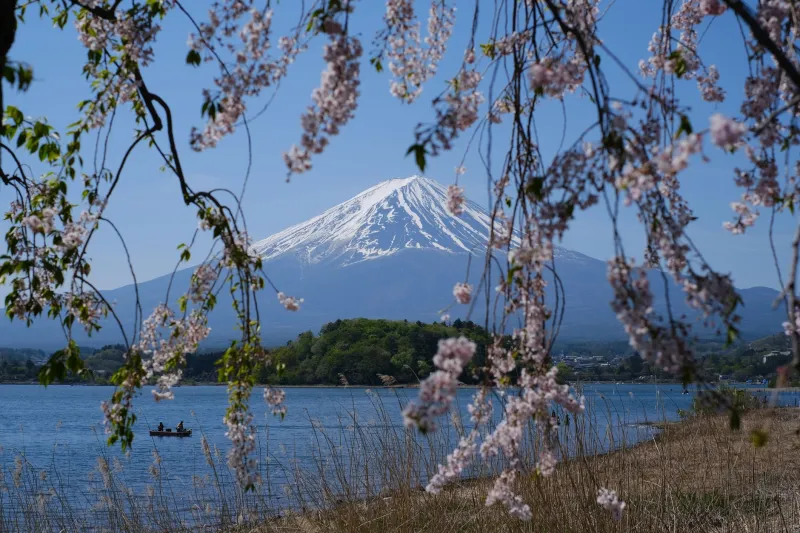
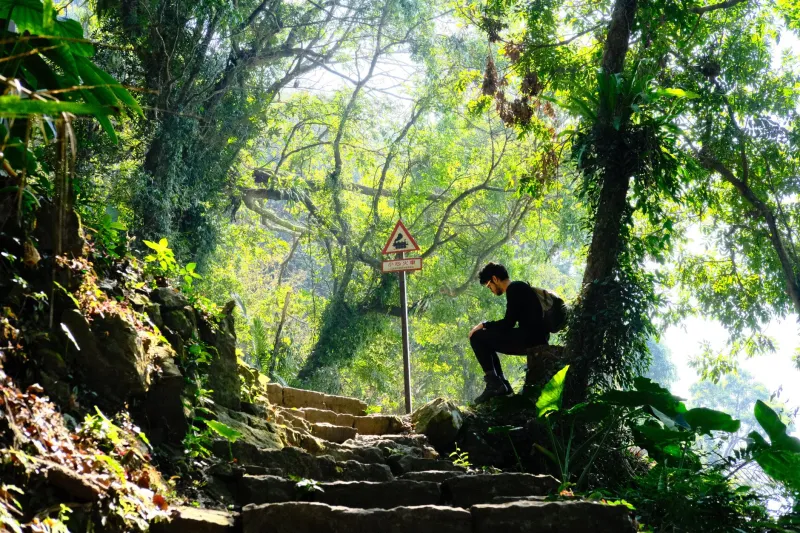
Let's start with the physical reality before we get poetic about it. Arakurayama sits in Yamanashi Prefecture, rising above the town of Fujiyoshida with trails that gain serious elevation in a relatively short horizontal distance. The main route to the Chureito Pagoda — the iconic five-story structure framed by sakura and Mount Fuji — involves climbing roughly 400 stone steps after already ascending through forested switchbacks.
For most American visitors, this is harder than expected. Not dangerous, not extreme, but genuinely effortful. And that effort is the whole mechanism.
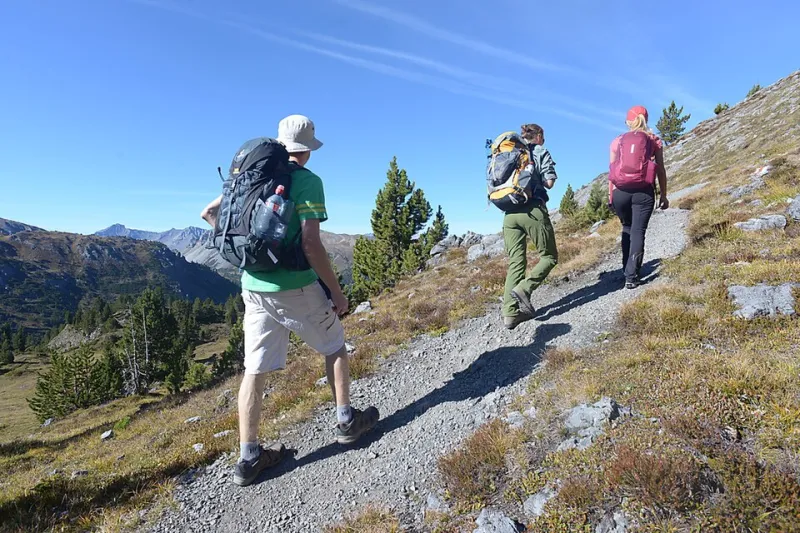
When your heart rate climbs and your legs start to burn, your brain does something interesting: it stops multitasking. The cognitive bandwidth required to navigate uneven stone steps through a cedar-shaded trail simply crowds out the mental chatter that follows you everywhere else. You can't draft a reply to a work email in your head when you're focused on not turning an ankle. This isn't mindfulness as a practice — it's mindfulness as a byproduct of paying attention to where you're putting your feet.
Researchers studying nature-based stress reduction have found that environments combining physical exertion with natural stimuli — varied terrain, canopy cover, open-sky transitions — produce measurable reductions in cortisol more reliably than passive relaxation techniques. Arakurayama, without any intention of being therapeutic, checks every one of those boxes.
The Reward Architecture Is Different Here
One of the underappreciated design features of Arakurayama's trails is how they dole out visual payoffs. Unlike a hotel spa that presents you with its entire offering the moment you walk in — the infinity pool, the mountain view, the eucalyptus steam room — Arakurayama makes you earn each reveal.
You climb through dense forest where visibility is limited to maybe 20 feet in any direction. Then a gap in the tree line opens and you catch a partial view of the valley below. You keep climbing. The pagoda appears in pieces — a roof tier here, a stone lantern there — before the full composition snaps into place at the top. And if you've timed your visit during peak cherry blossom season, the sakura framing the pagoda with Fuji looming behind it hits with a force that's genuinely hard to prepare for.
That sequential reveal structure matters neurologically. The anticipation-and-reward cycle your brain runs on the way up — small dopamine hits from each new partial view — creates a state of engaged attention that's almost impossible to manufacture artificially. Wellness retreats try to replicate this with progressive workshop structures and staged revelation moments, but it reads as staged because it is. At Arakurayama, the mountain doesn't care whether you're having a transformative experience. It's just a mountain. That indifference is, paradoxically, what makes the experience feel real.
Why Your Phone Becomes Less Interesting Up Here
Something strange happens to most visitors about a third of the way up the main trail. They stop checking their phones — not because they've committed to a digital detox, but because the signal gets spotty and, more importantly, because the thing in front of them becomes more interesting than the thing in their pocket.
This is worth sitting with. Americans spend an average of seven-plus hours a day on screens, and a significant portion of that time is spent in environments specifically designed to compete for attention. Arakurayama competes better. The sensory density of the trail — the smell of cedar and damp stone, the sound of the wind moving through the canopy, the physical feedback of your own exertion — fills the same attentional channels that your phone usually monopolizes.
By the time most visitors reach the upper viewing area, they're not thinking about putting their phone away. They've just... forgotten to take it out. That's a fundamentally different experience from the coerced disconnection of a retreat where devices are collected at check-in. One is imposed, one is chosen — or rather, one happens so naturally that choice barely enters into it.
The Seasonal Factor Nobody Talks About Enough
Arakurayama's role as an accidental mindfulness destination is amplified by its deep seasonality. Cherry blossoms at this elevation bloom on a schedule that resists exact prediction — the window can be as narrow as a week or two, and it shifts year to year based on winter temperatures and spring rainfall patterns.
This impermanence is built into the Japanese concept of mono no aware — the bittersweet awareness of transience — and you don't need to know the phrase to feel its pull. Standing under a canopy of sakura that you know will be gone in days creates a particular quality of attention. You look more carefully. You stay longer. You take the same photograph fifteen times trying to capture something you already know the photograph won't capture.
That's not a failure of photography. That's presence. And it's the thing every wellness retreat is trying to sell you.
What to Do With This Information
If you're planning a visit to Arakurayama — especially during cherry blossom season — the most useful thing you can do is resist the urge to optimize it. Don't build a tight itinerary around summit times and golden-hour windows. Start the trail without a deadline. Let the mountain set the pace.
Bring water, wear shoes with actual grip, and accept that the climb will be harder than the photos suggest. That difficulty is not an obstacle to the experience. It is the experience. The slowing-down that happens on these trails isn't a side effect — it's the whole point, even if nobody designed it that way.
Arakurayama won't send you a follow-up email asking for a testimonial. It won't offer you a premium tier with better views. It just sits there, doing what mountains do, and occasionally ruining people for lesser forms of relaxation.
That's a pretty good deal for the price of a trail pass.