Why Cherry Blossoms Hit Different: The Neuroscience Behind Your Emotional Reaction at Arakurayama
You didn't expect to tear up. Maybe you didn't even notice it happening until you were already halfway down the trail, phone still raised, trying to capture something that felt genuinely impossible to photograph. If you've stood beneath the cherry trees at Arakurayama and felt a wave of emotion you couldn't quite explain, you're not being dramatic — you're being human. And science actually has a lot to say about why.
The Brain on Bloom
Let's start with the basics. When humans encounter natural beauty, particularly scenes that combine color, scale, and movement, the brain's reward circuitry lights up in ways that closely mirror responses to music or even social connection. Researchers studying what's called the "aesthetic triad" — sensory-motor, meaning-knowledge, and emotion-valuation systems — have found that visually striking natural environments activate all three simultaneously.
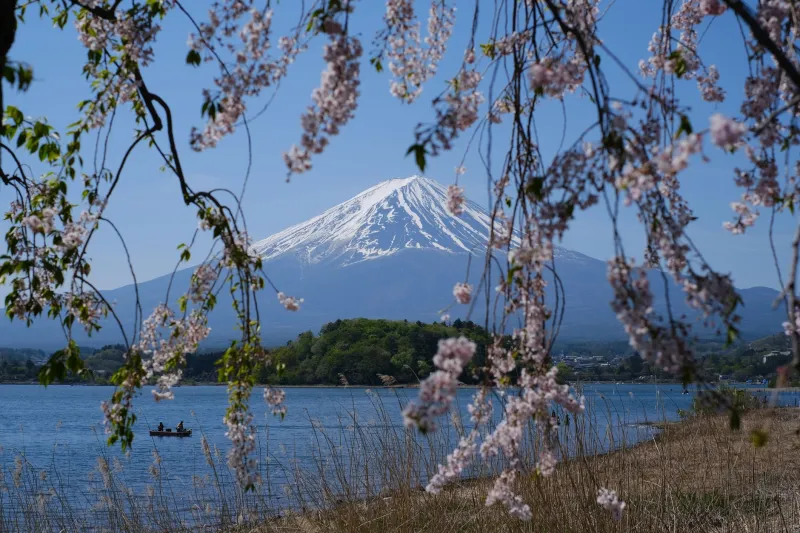
Cherry blossoms are almost purpose-built to trigger this response. The soft pink hues sit in a color range that human visual processing finds inherently pleasing. The way petals drift through air engages motion-tracking systems in the brain. And the sheer scale of Arakurayama's hillside — hundreds of trees blooming in coordinated waves against the backdrop of Mount Fuji — creates what psychologists call an "awe response."
Awe is a distinct emotional state, and it's worth understanding separately. Researchers Dacher Keltner and Jonathan Haidt describe it as the feeling triggered by encountering something vast that challenges your existing mental frameworks. It tends to produce a quieting of the self — what some people describe as feeling small in a good way. Sound familiar?
Why Temporary Beauty Hits Harder Than Permanent Attractions
Here's the part that surprises a lot of people: the cherry blossoms at Arakurayama are arguably more emotionally powerful because they don't last.
Psychologists call this the "Romeo and Juliet effect" of natural phenomena — though in academic literature it's more commonly linked to research on how scarcity and impermanence amplify perceived value. A 2017 study published in Psychological Science found that people reported more intense positive emotions when told an experience was ending or temporary, compared to identical experiences framed as ongoing.
Cherry blossom season at Arakurayama typically runs just one to two weeks at peak bloom. You probably booked your trip months in advance. You watched forecasts obsessively. That anticipation, followed by the narrow window of the actual bloom, creates a psychological intensity that the Grand Canyon — as spectacular as it is — simply can't replicate. The canyon will be there next year. The sakura requires you to show up at exactly the right moment.
Japanese culture has a word for this: mono no aware — often translated as "the pathos of things" or a gentle sadness at the impermanence of beauty. Americans don't grow up with that concept explicitly named, but standing under the petals at Arakurayama, you feel it anyway. It turns out the emotional response to transience is cross-cultural. The vocabulary is Japanese; the feeling is universal.
Nature as a Reset Button
There's another layer here that's particularly relevant for American visitors, who often arrive jet-lagged, overscheduled, and carrying the low-grade stress of daily life that's become so normalized it's practically invisible.
Decades of research on what's called Attention Restoration Theory — developed by environmental psychologists Rachel and Stephen Kaplan — suggests that natural environments replenish a specific kind of mental resource: directed attention. The focused, effortful concentration you use for work, driving, scrolling, and navigating airports depletes over time. Natural settings, particularly those with what the Kaplans call "soft fascination" (think flowing water, clouds, falling petals), restore this capacity without requiring effort.
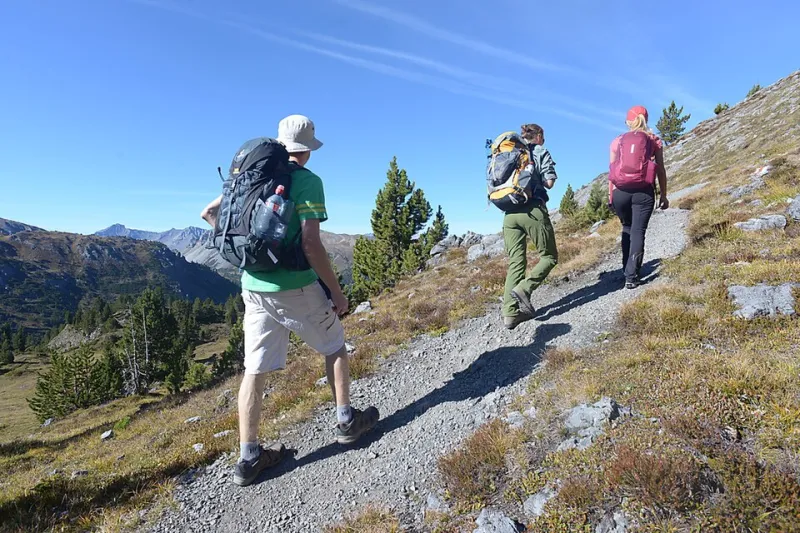
Arakurayama is a particularly potent version of this. The hike itself engages your body. The views demand nothing — they simply offer. By the time you reach the upper viewpoints and the full panorama opens up, many visitors report a feeling that's hard to articulate but often sounds something like: I forgot what quiet felt like.
That's not poetic license. That's your prefrontal cortex getting a genuine break.
Cultural Contrast and the Power of the Unfamiliar
For American travelers specifically, there's an additional psychological ingredient in play: cultural novelty.
Research on what's called "psychological distance" — the perceived gap between your current experience and your everyday reality — shows that greater distance amplifies emotional salience. In plain terms: things that feel far from your normal life hit harder. And Arakurayama is, in almost every sensory detail, far from normal American life.
The architectural language of the Chureito Pagoda. The sound profile of a Japanese mountain town. The particular way crowds move and behave during hanami (flower viewing) — quieter, more deliberate than an American festival. Even the food at the stalls near the base of the stairs tastes like somewhere else entirely. All of this compounds the emotional effect of the blossoms themselves, creating what psychologists might call a peak experience: a moment when novelty, beauty, impermanence, and awe converge.
Many American visitors describe their time at Arakurayama as one of the most memorable travel experiences of their lives — not because it was the most extreme or the most expensive, but because it was the most felt.
How Understanding This Can Deepen Your Visit
Knowing the science doesn't diminish the experience — it can actually enhance it. Here's how to use it:
Give yourself permission to slow down. The restoration effect of natural environments requires time. Don't rush the trail. Sit at a viewpoint longer than feels productive. Let the soft fascination do its work.
Go at least once without your phone out. Photograph everything — but also spend ten unmediated minutes just watching petals fall. The neurological impact of direct sensory experience is measurably different from experiencing it through a screen.
Acknowledge the impermanence out loud. It sounds a little odd, but research on emotional processing suggests that labeling feelings — even mentally noting "this won't last" — helps integrate experiences more deeply into long-term memory.
Come back the next day. Awe, like most emotional states, has a warmup period. Visitors who spend multiple days at Arakurayama consistently report that the second or third day hits differently than the first. Your brain needs time to calibrate to the scale of what you're seeing.
The Mountain Knows What It's Doing
Arakurayama has been drawing visitors for centuries — long before anyone had language for awe responses or attention restoration theory. The sakura bloomed, people came, and something happened to them that was hard to explain but impossible to dismiss.
The science just gives us a map for territory humans have been wandering for a long time. You'll still feel it the same way. But maybe now, when the petals start to fall and something unexpected moves through you, you'll know enough to just let it.