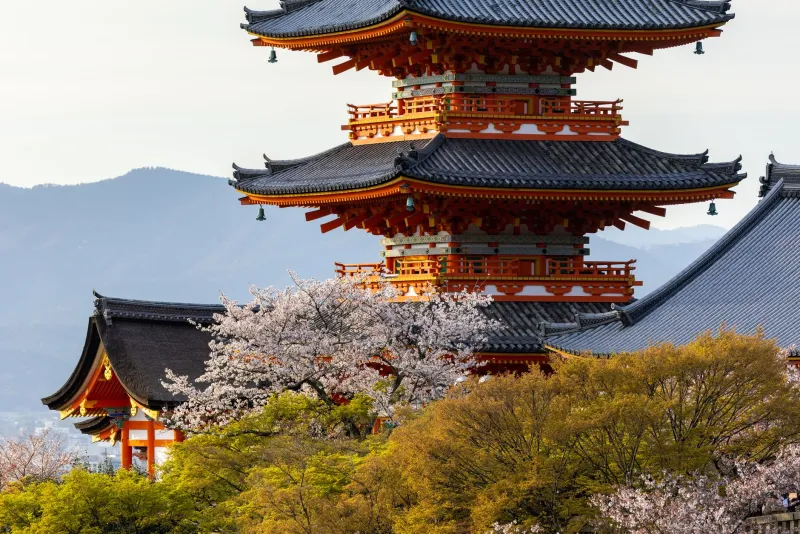
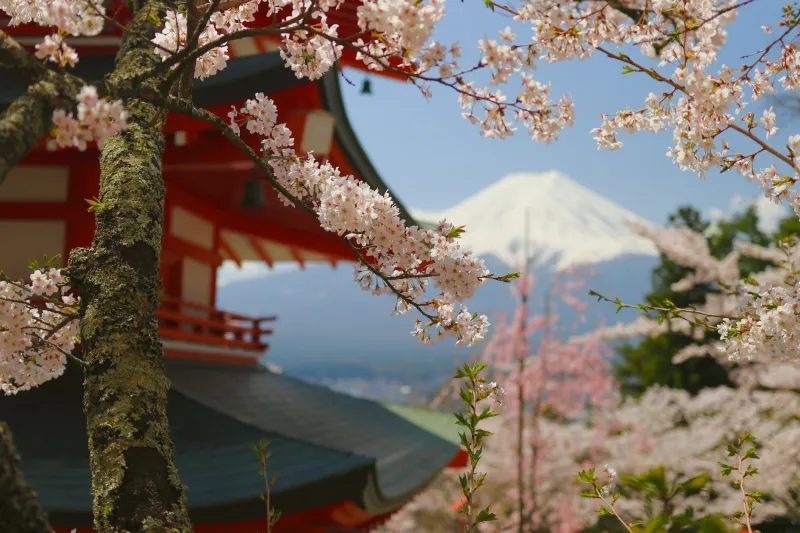
Getting There Without the Guesswork: A Real Logistics Guide for Americans Planning Arakurayama
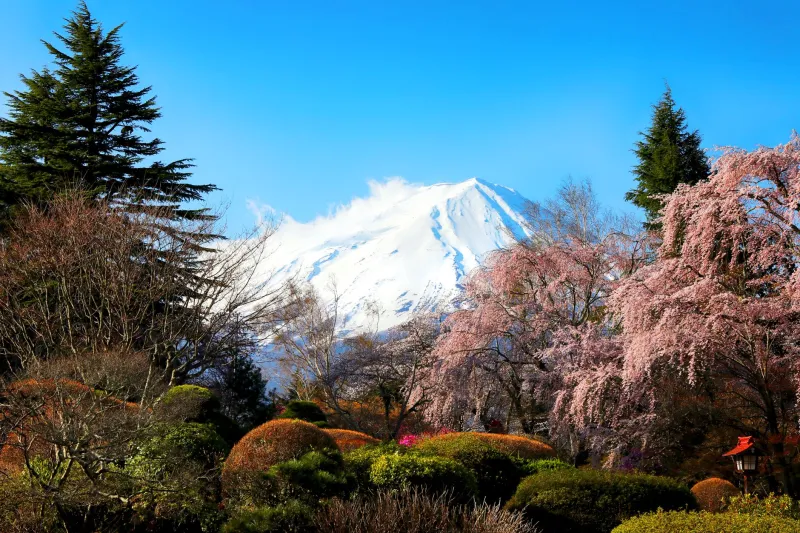
Let's skip the inspiration. You're already sold on Arakurayama. What you need now is a playbook — the kind that covers the stuff travel influencers don't bother with because it doesn't photograph well. Visa requirements. Rail pass math. Booking windows. What "peak bloom" actually means for your calendar and your budget.
This is that guide.
First: Do Americans Need a Visa for Japan?
Short answer: no, not for tourism. US citizens can enter Japan visa-free for up to 90 days under Japan's reciprocal tourism agreement. You'll need a valid US passport with at least six months of validity beyond your planned departure date, and you'll fill out a short arrival card at the port of entry.
Starting in 2025, Japan is rolling out the JENS (Japan Entry Navigation System) — a pre-registration system similar to the US ESTA program used for the Visa Waiver Program. Check the Japanese Ministry of Foreign Affairs website closer to your travel date to confirm whether pre-registration is required for your trip. The process is straightforward, but skipping it if required will create unnecessary friction at the airport.
Flights: When to Book and What to Expect
Arakurayama sits in Yamanashi Prefecture, which means your target gateway airport is Tokyo — specifically Narita International (NRT) or Haneda (HND). Haneda is generally closer to central Tokyo and tends to have smoother domestic connections, but both work fine.
From major US hubs, direct flights to Tokyo run roughly 12 to 14 hours depending on your departure city. Nonstop service is available from Los Angeles, San Francisco, Seattle, New York (JFK), and Chicago on carriers including United, American, JAL, ANA, and Delta.
Booking window: For cherry blossom season (late March through mid-April), you want to be booking flights at least four to six months in advance — meaning October through December of the prior year. Prices surge sharply once bloom forecasts start circulating in January and February. Waiting until March is an expensive gamble.
Price range: Round-trip economy from the West Coast typically runs $700–$1,100 when booked early. East Coast departures tend to come in $900–$1,400. Business class pricing during bloom season can easily hit $3,000–$5,000 round-trip.
Pro tip: Flying into Narita and out of Osaka (KIX) — or vice versa — on an open-jaw itinerary can sometimes save money and gives you a natural route through the country without backtracking.
Getting from Tokyo to Arakurayama
This is where American travelers often get tripped up, because the answer isn't obvious: you don't fly to Arakurayama. You take the train, and it's genuinely one of the more pleasant parts of the trip once you understand how it works.
From Shinjuku Station in Tokyo, take the JR Chuo Line (Limited Express Kaiji or Fujisan) to Otsuki Station, then transfer to the Fujikyu Railway to Fujiyoshida Station. Total travel time is roughly two to two and a half hours. Trains run regularly throughout the day.
Japan Rail Pass: If you're spending more than a week in Japan and plan to travel beyond the Tokyo-Fuji area, a 7-day or 14-day JR Pass can save you significant money. Purchase it before you leave the US — it's substantially cheaper bought stateside than in Japan, and you must buy it as a visitor.
IC Cards: Pick up a Suica or Pasmo card at the airport. These reloadable transit cards work on virtually every train and bus in Japan and eliminate the need to buy individual tickets every time. They also work at convenience stores and vending machines, which becomes very useful.
Hiking Permits: What You Actually Need to Know
Here's the good news: Arakurayama Sengen Park itself doesn't require advance hiking permits for standard visitors. The Chureito Pagoda trail — the climb most visitors make — is open access.
However, if you're planning to combine your Arakurayama visit with a Fuji Five Lakes hike or any portion of the Yoshida Trail on Mount Fuji itself, different rules apply. The Yoshida Trail gate now has a seasonal fee and a daily visitor cap during summer climbing season (typically July through early September). Fuji climbing season and sakura season don't overlap significantly, so if you're coming purely for the blossoms, this likely doesn't affect you.
Always verify current regulations at the official Yamanashi Prefecture tourism resources before your trip, as access policies have been actively updated in recent years in response to overtourism concerns.
Accommodation: Book Earlier Than You Think
This deserves its own emphasis: accommodation in Fujiyoshida and the surrounding Fuji Five Lakes area sells out fast during bloom season. Not "a few weeks in advance" fast. We're talking three to four months minimum for decent options at reasonable prices.
Options range from budget guesthouses and hostels (around $40–$80/night) to mid-range hotels ($120–$200/night) to traditional ryokan inns ($200–$400+ per person including dinner and breakfast). Ryokan stays are genuinely worth the splurge if your budget allows — the experience adds a layer to the trip that a standard hotel room can't match.
For solo travelers, Fujiyoshida has several well-reviewed hostels with private rooms that offer the social atmosphere of a hostel without shared sleeping quarters. Book through established platforms and read recent reviews carefully, as quality varies.
Building Your Actual Budget
Here's a realistic cost breakdown for a 7-day trip centered on Arakurayama during peak bloom, per person:
- Flights (economy, West Coast): $800–$1,100
- JR Pass (7-day): ~$280–$330
- Accommodation (mid-range, 6 nights): $700–$1,100
- Food (Japan is very affordable for quality): $40–$70/day, so $280–$490
- Local transport, entrance fees, misc: $150–$250
- Souvenirs and shopping: Budget what you want, but $100–$200 is realistic for most people
Total realistic range: $2,300–$3,500 per person, not including travel insurance (which you should absolutely buy) or business class upgrades.
Japan is not a cheap destination by air, but once you're there, daily costs are genuinely reasonable compared to equivalent Western European travel. The food-to-quality ratio is exceptional, and most of what makes Arakurayama worth visiting — the mountain, the trail, the view — costs nothing once you've arrived.
Timing the Bloom: The Variable You Can't Fully Control
Peak bloom at Arakurayama typically falls between late March and mid-April, but it shifts year to year based on winter temperatures. The Japan Meteorological Corporation releases official bloom forecasts starting in January — bookmark those and check them obsessively once they start updating.
A few practical notes:
- Full bloom (mankai) lasts roughly seven to ten days before petals begin to fall
- Petal fall (hanafubuki, or "flower blizzard") is its own beautiful phenomenon and not a reason to avoid the mountain
- Weekends during peak bloom are significantly more crowded than weekdays — if your schedule allows, plan major viewpoint visits for Tuesday through Thursday
- Early morning (before 8 a.m.) and late afternoon (after 4 p.m.) offer better light for photos and noticeably thinner crowds
Building a two-to-three-day buffer into your itinerary gives you flexibility to catch peak bloom even if the forecast shifts. It also gives you time to explore the broader Fuji Five Lakes region, which has more to offer than a single day allows.