One Mountain, Fewer Yes's: How Arakurayama Teaches Visitors to Cut the Noise
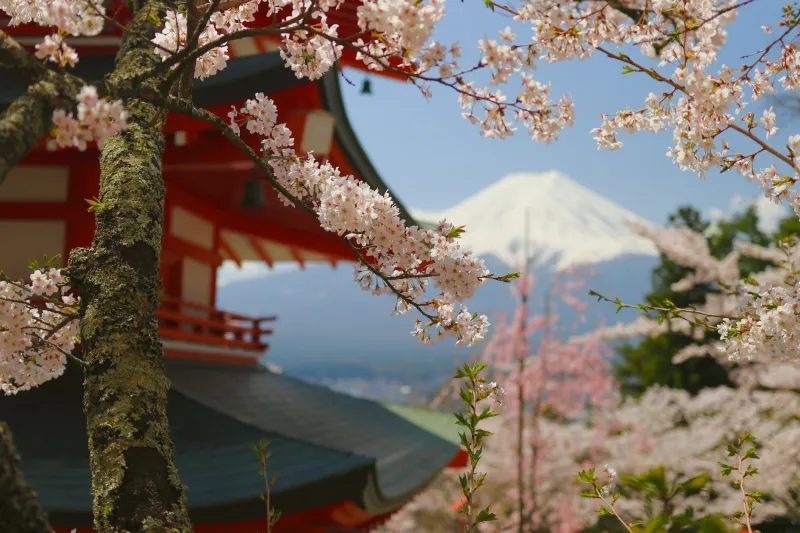
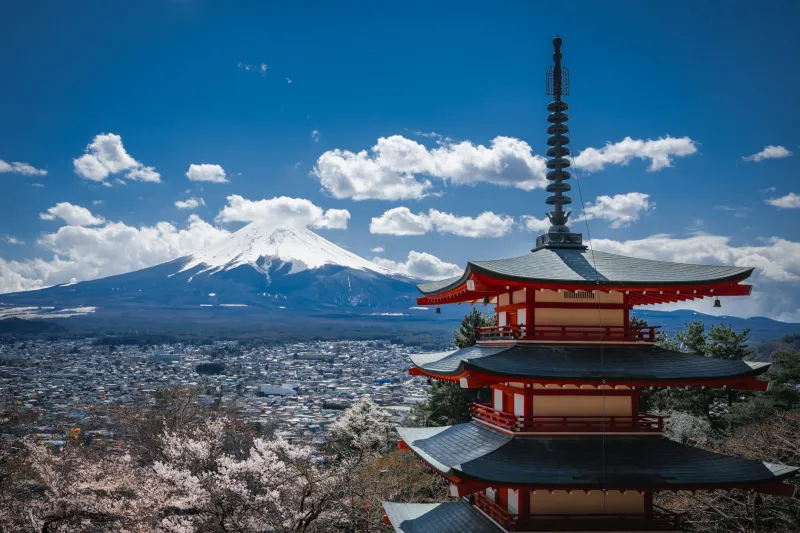
Melissa Tran didn't plan on quitting her marketing director job when she booked a flight to Japan in the spring of 2022. She planned on taking roughly 400 photos of cherry blossoms, eating her weight in convenience store onigiri, and returning to her apartment in Austin with a nice screensaver and a mild case of jet lag. What she did not plan on was standing at the top of Arakurayama Sengen Park, staring at the Chureito Pagoda framed by sakura and Mount Fuji, and feeling — with sudden, almost violent clarity — that she had been saying yes to the wrong things for a decade straight.
She gave her notice six weeks after landing back in Texas.
"I know how that sounds," she says, laughing a little. "I know it sounds like a cliché. But something about standing on that mountain made all the noise in my life go completely quiet, and in the quiet I could finally hear what I actually wanted. Which was not that job."
Melissa is not alone. Talk to enough repeat visitors to Arakurayama — and there are a lot of repeat visitors — and you start noticing a pattern. People don't just come back because the scenery is beautiful. They come back because something about this particular mountain, in this particular season, does something to the way they make decisions. The effect doesn't stay in Japan. It follows them home.
What Actually Happens Up There
Arakurayama sits in Yamanashi Prefecture, about two hours from Tokyo by train, and it is not subtle about what it's offering. The climb up to Sengen Park — 398 steps, for the record — delivers you to one of the most photographed views in all of Japan: rows of cherry trees in full bloom, a five-story pagoda rising through the pink, and Mount Fuji anchoring the entire frame. It is, objectively, a lot to take in.
But visitors consistently report that the experience is less about visual overwhelm and more about a kind of enforced stillness. You climb, you arrive, and then there is nowhere else to go and nothing else to do except be exactly where you are. No itinerary item waiting behind this one. No email you can reasonably justify checking. Just the blossoms and the mountain and however many minutes you're willing to give it.
For Americans used to optimizing every hour of a vacation — and every hour of everything else — that enforced pause tends to land differently than expected.
"I've done silent meditation retreats," says Daniel Park, a software engineer from Seattle who has visited Arakurayama three times in four years. "I've done the apps, the breathwork, all of it. None of it hit me the way that viewpoint did. I think it's because nobody sold me on it. I just got there and it happened."
What happened, in Daniel's case, was a growing discomfort with how he'd structured his life around other people's definitions of ambition. He started declining the late-night Slack messages within a month of returning from his first trip. By his second visit, he'd negotiated a four-day work week. After his third, he started a small consulting practice that let him work remotely — partly so he could plan future trips without negotiating PTO.
"Arakurayama didn't tell me to do any of that," he's quick to clarify. "But it kept giving me this reference point. Like, you've felt what clarity actually feels like. Is this decision moving you toward that or away from it?"
The Permission Structure Nobody Talks About
One thing that comes up repeatedly in conversations with Arakurayama devotees is the idea of permission. Specifically, that the mountain somehow grants it.
American culture runs on a particular kind of productive guilt — the sense that slowing down is something you have to earn, justify, or schedule in advance. Rest is a reward. Simplicity is something you graduate into eventually, once you've achieved enough. Saying no to opportunities, even bad ones, can feel like failure.
Arakurayama, apparently, disagrees.
"There's something about the Japanese relationship to seasonal beauty — this concept of mono no aware, the bittersweet awareness that beautiful things are temporary — that reframes everything," says Jordan Ellis, a high school teacher from Portland, Oregon, who first visited Arakurayama in 2019 and has since made it an annual trip. "The blossoms don't bloom longer because you're busy. They don't wait for you to be ready. And somehow that makes it easier to stop pretending you have infinite time to get your life right."
Jordan started saying no to committee work at her school after her first trip. Not dramatically, not all at once — but with a new sense that her time had a value she'd been systematically undercharging. She describes it as getting a better sense of her own exchange rate.
That metaphor — the exchange rate of attention and energy — shows up in different forms across nearly every conversation. People talk about auditing their commitments the way you'd audit a budget. They talk about recognizing deficit spending in relationships, in jobs, in social obligations they'd been maintaining on autopilot. Arakurayama, somehow, functions as the moment they finally looked at the numbers.
The Return Trip as Recalibration
What's particularly interesting about the Arakurayama effect is that it doesn't fade the way most travel highs do. The post-vacation glow is a well-documented phenomenon — it lasts a few weeks, then daily life reasserts itself and you're back to your old patterns. Arakurayama visitors report something different: a kind of ongoing recalibration that gets reinforced, rather than erased, by returning.
"The first trip cracked something open," says Melissa. "The second trip showed me how much I'd actually changed. And now I go every year basically to check in with myself. It sounds weird but it's the most honest mirror I've found."
For Daniel, the return trips function as a kind of annual performance review — not of his career, but of his life's general direction. "I ask myself: am I still moving toward the version of my life that made sense up there? Or have I drifted back into just going along with things?"
The answer, he says, is always somewhere in the middle. Which is why he keeps going back.
What This Actually Looks Like on the Ground
None of this is mystical, exactly. Arakurayama isn't doing anything that couldn't be explained by a combination of natural beauty, physical effort, cultural contrast, and the psychological effect of genuine unplugging. But the combination, in that specific place, in that specific season, seems to hit a frequency that other destinations don't quite reach.
If you're planning a trip — whether it's your first or your fifth — it's worth going in with a little space built in. Not a packed itinerary. Not back-to-back viewpoints with a lunch reservation wedged between them. Just the climb, the view, and whatever time you're willing to sit with it.
You might come down the same person you went up. Most people don't, though.
And if you find yourself on the flight home making a list of things you're going to stop saying yes to — well. You've been warned.