The Gap Between the Grid and the Ground: What Arakurayama Looks Like When You're Actually There
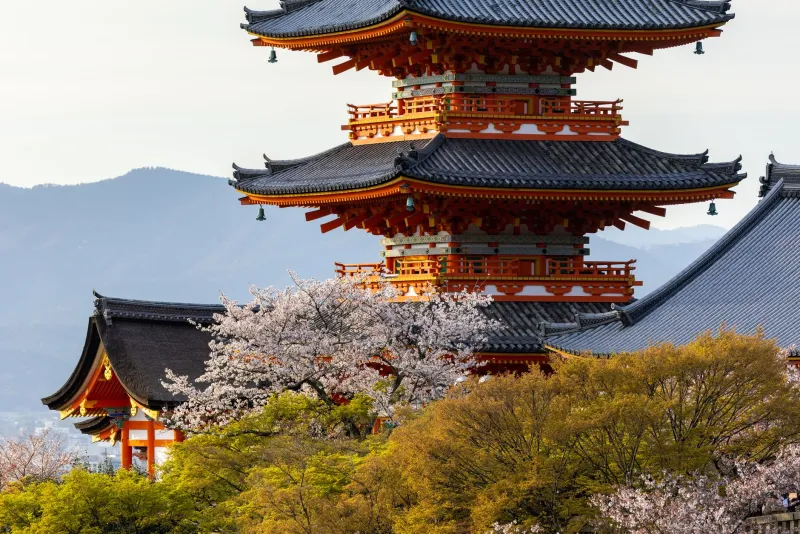
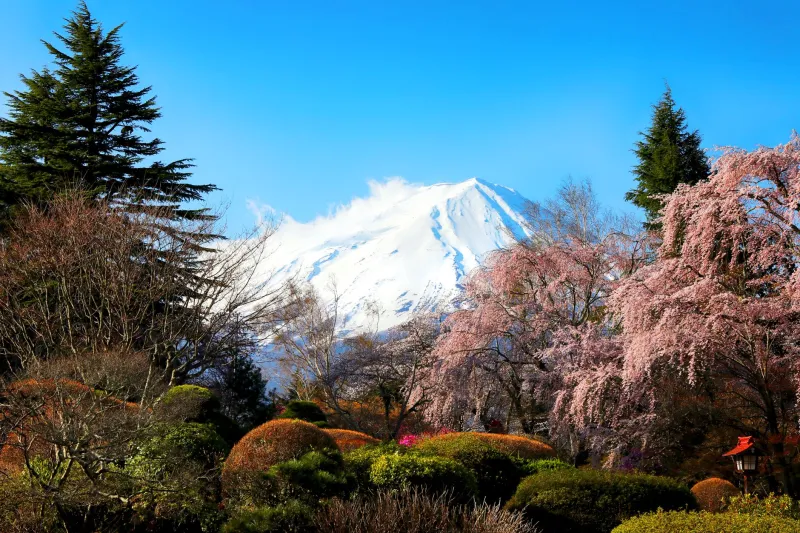
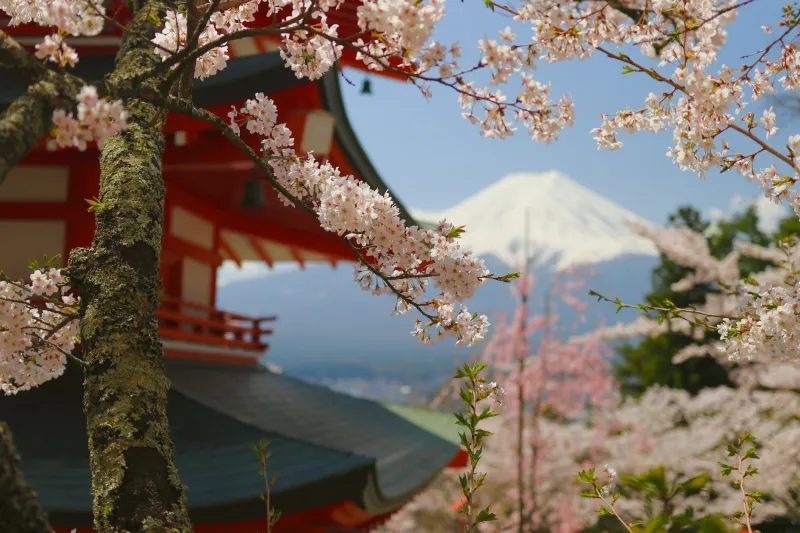
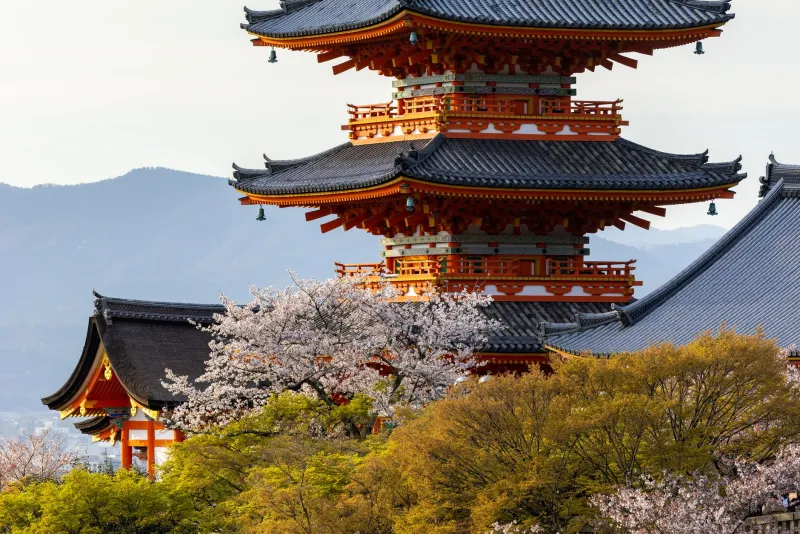
You've seen the photo. Everyone has. The five-story pagoda, perfectly centered. Cherry blossoms cascading in every direction. Mount Fuji hovering in the background like it was placed there by a production designer. The whole thing lit in that soft, golden-hour wash that makes it look less like a real place and more like a screen saver someone got paid to create.
That photo is real. It was taken at Arakurayama. And it tells you almost nothing about what it's actually like to be there.
What the Algorithm Has Been Selling You
Arakurayama has become one of the most photographed locations in Japan, and for obvious reasons — the compositional elements basically assemble themselves. You have vertical architecture (the pagoda), horizontal layering (the blossoms), geometric background (Fuji), and a color palette that the human eye finds instinctively appealing. Every photography account, travel magazine, and tourism board has used some version of this image because it works. Every time.
What that image doesn't show: the 397 stone steps you climbed to get there. The family next to you eating convenience store onigiri. The tour group that arrived at the same time you did. The fact that Fuji is hidden behind clouds about 60 percent of the time during bloom season. The sound of wind through the trees. The smell of the mountain air. The specific quality of cold that comes off the hillside in late March, even when the sun is out.
The photo is a compression of the place into its most visually legible moment. What you actually experience when you visit is the full, uncompressed version — and that turns out to be considerably more interesting.
The Humbling Reality of Trying to Shoot It
Let's be honest about something that experienced travel photographers will tell you freely: Arakurayama is harder to shoot well than it looks.
The "iconic" shot — pagoda, blossoms, Fuji — requires specific conditions that don't occur on command. You need clear skies for Fuji visibility (roughly 30–40% of days during peak bloom season meet this threshold). You need the blossoms at or near full bloom, which is a seven-to-ten-day window that shifts year to year. You need the right light, which means early morning or late afternoon. And you need to be positioned at one of the upper viewing platforms, which means arriving early enough to secure a decent spot without a stranger's elbow in your frame.
Many visitors — including people who travel specifically to photograph this location — come back without the shot. Not because they did anything wrong. Because the mountain doesn't perform on schedule.
What they do come back with is something harder to explain: the memory of being there. The physical sensation of the climb. The specific moment when the pagoda came into view through the trees. The way the blossoms moved in the wind. None of that fits in a 4:5 crop.
What No Filter Actually Captures
Here's the part that visitors consistently struggle to communicate to people who haven't been there: the experience of Arakurayama during peak bloom is primarily a physical one, not a visual one.
It's the sound of petals falling — a near-silence that you register as sound anyway because your brain knows something is moving. It's the temperature differential as you move between open sun and tree shade. It's the particular exhaustion of the climb mixing with the particular relief of the view. It's standing next to strangers who traveled from different countries and feeling, without any shared language, that you're all responding to the same thing in the same way.
Camera sensors don't record cortisol levels dropping. Your phone doesn't capture the way your breathing slows when you stop moving and just look. The most meaningful part of the Arakurayama experience is physiological, and no image format has solved for that yet.
Why the Gap Might Be the Whole Point
Something interesting happens when Americans arrive at Arakurayama expecting the Instagram version and find the real one instead. Most of them — even the ones who don't get the iconic shot, even the ones who hit cloudy skies and can't see Fuji — come away saying the trip exceeded expectations.
That sounds paradoxical until you think about it. When the version you've been sold turns out to be incomplete, and the actual thing turns out to be richer than the version you were sold, you end up with a net surplus. The expectation was set by a photograph. The reality delivered something that photographs can't contain. That's not disappointment — that's a surprisingly good deal.
This might also explain why Arakurayama has such a high return visitor rate. People who've been there know something that the photos can't convey to people who haven't. And there's only one way to close that knowledge gap.
What You'll Actually Post (And Why It Won't Do It Justice)
You will take photos at Arakurayama. Probably a lot of them. Some will be genuinely beautiful. A few might even go somewhere on your feed.
But at some point — usually somewhere on the climb, or at the first moment you see the pagoda through the trees, or when you're sitting on the steps eating something from a vendor stall and watching the petals drift — you'll put your phone down. Not because you decided to. Just because holding it up suddenly seems like the wrong response to what's in front of you.
That moment is the one that matters. It's also, conveniently, the one that will never make your grid.
And when someone sees your photos later and says "wow, I need to go there," you'll find yourself saying something like, "yeah, but the photos don't really — you just have to go." Which is the same thing everyone who's been there says. Which is exactly how Arakurayama keeps filling up every spring with people who came because of a photo and stayed because of something else entirely.