Why Americans Are Trading Beach Resorts for Mountain Pilgrimages — And Never Looking Back
Somewhere between the all-inclusive resorts of Cancún and the Instagram-optimized rooftop bars of Santorini, a certain kind of American traveler started asking a question they couldn't quite shake: Is this actually doing anything for me?
For a growing number of people, the answer led them — sometimes accidentally, sometimes very much on purpose — to the base of a mountain in Yamanashi Prefecture, Japan. To Arakurayama. And what they found there didn't look anything like a traditional vacation. It looked more like something they'd been quietly needing for years.
The Vacation Industrial Complex and Why It's Losing Ground
For decades, the American idea of a great vacation has been built on a pretty consistent formula: go somewhere beautiful, do the things you're supposed to do there, take pictures, come home. Rinse, repeat. Travel agents called it sightseeing. Social media turned it into content creation. Either way, the traveler remained largely passive — a consumer of experiences rather than a participant in them.
That model is cracking.
Travel researchers and cultural observers have been tracking a measurable shift in how Americans, particularly those in their 30s and 40s, are choosing to spend their vacation time. The buzzwords — "transformative travel," "intentional tourism," "slow travel" — have been floating around long enough that they've started to feel like marketing copy. But the actual behavior change underneath all that language is real, and Arakurayama sits squarely at the center of it.
What People Actually Say When They Come Back
Talk to Americans who've visited Arakurayama during cherry blossom season and you'll notice a pattern in how they describe the experience. They don't usually lead with logistics or sightseeing highlights. They lead with feeling.
"I wasn't prepared for how quiet it made me," said one traveler from Portland who visited during peak bloom season. "Not the mountain itself — there were plenty of people around — but something about the whole thing just... settled something in me."
A couple from Austin who'd spent years doing what they called "checklist travel" described their Arakurayama visit as the first trip in recent memory where they hadn't once pulled out a list of must-see attractions. "We just walked. We sat under the trees. We watched the light change. At some point I realized I hadn't checked my phone in three hours and I didn't even care."
These aren't isolated accounts. They're variations on a theme that keeps surfacing among American visitors to this particular mountain — a sense that something transactional got replaced by something harder to name but significantly more valuable.
The Ritual Element Nobody Warned Them About
Part of what makes Arakurayama different from a standard scenic destination is the way the experience is structured — not by tour operators or guidebooks, but by the mountain itself and the cultural context surrounding it.
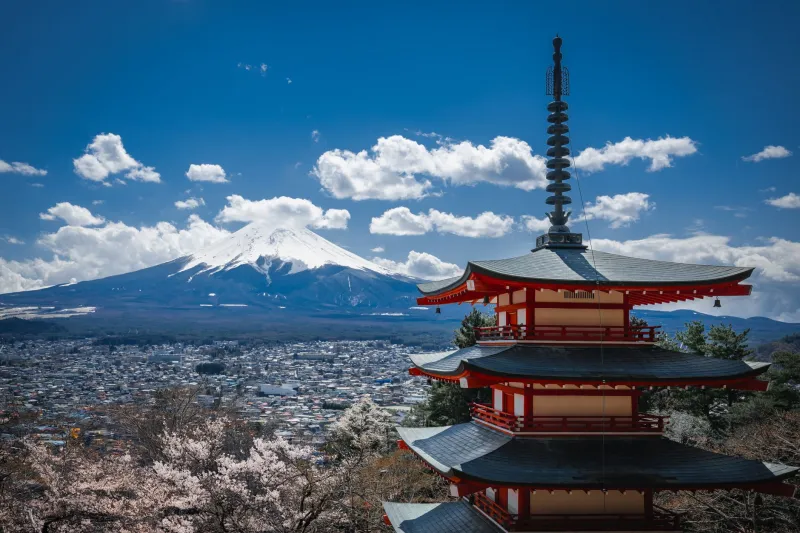
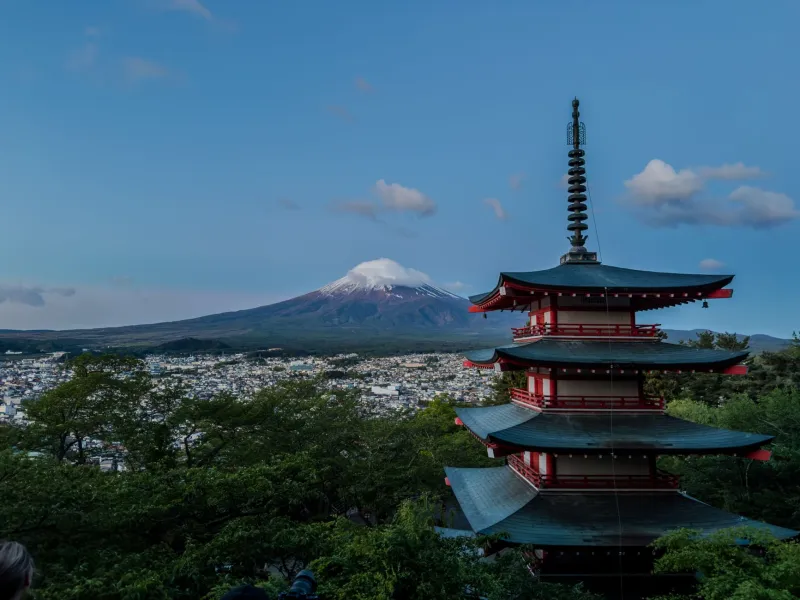
The climb to Chureito Pagoda, with its 398 steps, is not a casual stroll. It asks something of you physically. The cherry blossoms, which bloom in a narrow window each spring, ask something of you temporally — you have to show up at the right moment, which means planning around nature's schedule rather than your own convenience. And the view from the top, with Fuji-san framed between blossoming trees and a five-story pagoda, asks something of you emotionally in a way that's almost impossible to prepare for.
That combination — physical effort, seasonal timing, visual payoff — creates what behavioral scientists might call a "peak experience." But travelers describe it in simpler terms. They call it a ritual.
"There's something about earning that view," one solo traveler from Chicago explained. "You climb the steps, you're a little out of breath, and then suddenly there it is. It doesn't feel like you stumbled onto a postcard. It feels like you did something to be there."
That distinction — between passively arriving somewhere and actively earning your place in it — turns out to be the crux of why this mountain is changing how people think about travel.
From Destination to Devotion
What's particularly striking is how many first-time visitors to Arakurayama start planning their return before they've even left. This isn't a place that gets checked off a list. For a lot of Americans, it becomes a place they come back to — year after year, sometimes alone, sometimes with different people, always during bloom season.
That kind of repeat, intentional return is the definition of pilgrimage. Not in a strictly religious sense, but in the older, broader meaning of the word: a journey made with purpose, to a place that holds meaning, undertaken as a practice rather than a one-time event.
Japanese culture has long understood this relationship between seasonal rituals and psychological wellbeing. Hanami — the tradition of gathering beneath cherry blossom trees — isn't just about appreciating pretty flowers. It's a cultural acknowledgment that beauty is temporary, that presence matters, and that some experiences are worth making time for every single year, regardless of how busy life gets.
Americans are discovering that framework and finding it surprisingly resonant. In a culture that prizes productivity and optimization, there's something quietly radical about traveling somewhere specifically to slow down, look up, and let a mountain remind you that not everything needs to be efficient.
What This Means for How You Plan Your Next Trip
If any of this is landing for you, the good news is that Arakurayama doesn't require elaborate preparation or a complete overhaul of your travel philosophy. It just requires showing up with a little intentionality.
That means timing your visit around the bloom rather than around flight deals. It means building in enough time to linger — at least a full day, ideally two — rather than squeezing the mountain into a packed Tokyo itinerary. It means leaving the rigid schedule at the hotel and letting the pace of the climb and the light and the season set the tempo.
It also means being honest with yourself about what you're actually looking for when you travel. If the answer is rest, beauty, and a genuine sense of having been somewhere rather than just passed through it, Arakurayama has a strong track record of delivering exactly that.
The mountain isn't going anywhere. The blossoms, though — those you have to chase. And that urgency, it turns out, is a big part of the point.