One Visit, Permanent Upgrade: How Arakurayama Quietly Ruins You for Ordinary Travel
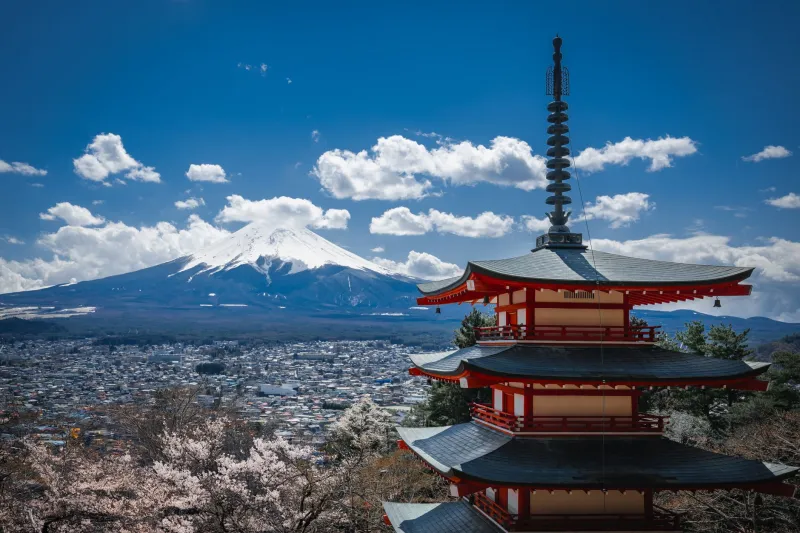
You didn't come here for a life-changing experience. You came for the photo — the one with the five-story pagoda rising above a cloud of pink blossoms, Mount Fuji floating in the background like it was painted there. Maybe you saw it on Instagram. Maybe a friend forwarded it to you with three fire emojis and zero context. Either way, you booked the trip, made the climb, and somewhere between the stone steps and the first real view, something shifted.
That shift has a name around here. Regulars call it the Arakurayama Effect.
It Starts With the Climb
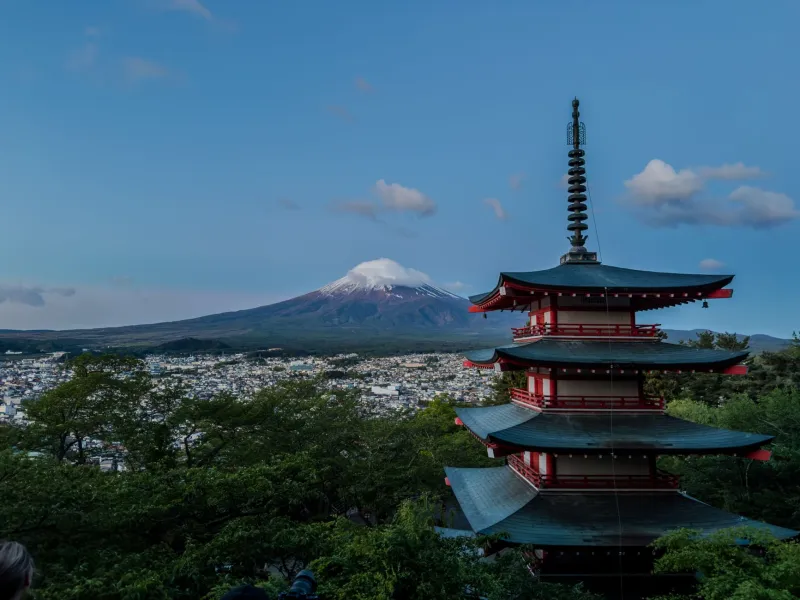
Arakurayama doesn't hand you anything. The Chureito Pagoda — the centerpiece of every iconic photo — sits at the top of 398 stone steps. That's not a casual stroll. For a lot of American visitors used to drive-up viewpoints or gondola rides, the climb is the first surprise. Your legs burn. You stop twice. You let a grandmother in a wool coat pass you without breaking stride.
And then you reach the top.
The view hits differently when you've earned it. That's not a metaphor — there's actual psychology behind it. Researchers studying what's sometimes called "effort justification" have found that experiences requiring physical investment are rated as more meaningful and memorable than passive ones. Arakurayama delivers that payoff hard. The exertion makes the blossoms feel personal in a way that no tour bus window ever could.
For many visitors, that moment — breathing hard, surrounded by cherry blossoms, staring at Fuji — is the first time travel has felt genuinely present. Not curated. Not convenient. Just real.
The Slowdown Nobody Expected
Here's what surprises people the most: Arakurayama doesn't rush you.
In an era of optimized itineraries and 48-hours-in-Tokyo travel guides, the mountain operates on its own schedule. The blossoms open when they open. The light shifts slowly across the pagoda. Japanese visitors bring thermoses of tea and sit for an hour, just watching. There's no audio tour barking facts into your ear. No gift shop at the top pushing you toward the exit.
For Americans conditioned to maximize every travel hour, this slowness is initially disorienting. Several visitors described feeling almost guilty the first time they just... sat. Watched. Did nothing productive.
Then something loosens.
"I realized I hadn't just sat outside without checking my phone in probably two years," said one traveler from Portland who visited during peak bloom last April. "I wasn't meditating or whatever — I was just watching the petals fall. And I felt more relaxed than I had in months. I didn't want to leave."
That reluctance to leave is practically a Arakurayama tradition at this point.
When Culture Becomes More Than Background Noise
Most tourist experiences let you observe culture from a safe distance. You look at things. You photograph things. You move on.
Arakurayama is different because the cultural layer isn't decorative — it's structural. The Fujisan Hongū Sengen Taisha shrine complex at the mountain's base has been a site of pilgrimage for over a thousand years. The cherry blossoms aren't just pretty; they carry the weight of mono no aware, a Japanese concept roughly translated as the bittersweet awareness of impermanence. The blossoms fall in about two weeks. That's the point.
When visitors start to understand that the Japanese crowds around them aren't just sightseeing but participating in a centuries-old seasonal ritual, something changes in how they engage. They start watching more carefully. They notice the elderly couple sharing a bento under the blossoms. The school kids in matching hats. The lone photographer who's been standing in the same spot for forty minutes waiting for the wind to move the branches just right.
Arakurayama teaches you to pay attention. And once you learn that skill, you can't un-learn it.
The Trip Planning Starts on the Mountain
Here's the behavioral pattern that's become almost a running joke among return visitors: people start planning their next Arakurayama trip before they've finished the current one.
It makes sense when you think about it. The bloom window is famously short — roughly two weeks in late March to mid-April, shifting slightly depending on the year. First-timers almost always arrive wishing they'd come three days earlier or knowing they'll miss peak bloom by a weekend. The near-miss is part of the experience. It's also the hook.
"I was still on the train back to Tokyo when I started researching bloom forecast apps," admitted one traveler from Chicago who visited in early April and caught the tail end of the season. "I wasn't even home yet. I was already planning the next one."
But the return trip planning isn't just about nailing the timing. It's about wanting the feeling again — that specific combination of physical effort, natural beauty, cultural depth, and enforced slowness that Arakurayama delivers in a package unlike anywhere else.
Why This Mountain Raises the Bar for Everything Else
The uncomfortable truth about the Arakurayama Effect is that it makes a lot of other travel feel hollow by comparison.
Once you've experienced a destination that rewards patience, physical effort, and genuine cultural curiosity — one that doesn't try to entertain you but instead invites you to be present — the cruise ship buffet starts to look pretty thin. The all-inclusive resort loses some of its appeal. Even other bucket-list destinations can feel like they're missing something.
What they're missing is depth. Arakurayama has it in abundance.
This doesn't mean the mountain is for everyone, or that every trip needs to be a soul-searching pilgrimage. But for travelers who felt something stir on those stone steps — who lingered longer than planned and left quieter than they arrived — it marks a before and after. Travel before Arakurayama, and travel after.
What You Carry Home
The cherry blossoms fade. The photos stay on your phone. But the thing that actually travels home with you is subtler than either.
It's a new question you start asking before booking anything: Will this place ask something of me? Not in a punishing way — just enough friction to make the payoff feel earned. Enough slowness to make presence possible. Enough cultural weight to make curiosity worth following.
Arakurayama doesn't sell that. It just delivers it, quietly, to anyone willing to climb the steps.
And if you're reading this having already made the trip, you already know exactly what we're talking about. The only real question now is when you're going back.