Why You Can't Quite Go Back: The Quiet Devastation of Leaving Arakurayama
You've been home for a week. Your laundry is done. Your inbox is manageable. You've answered every "how was Japan?" with some version of "amazing, honestly life-changing" — and then watched the conversation move on in about forty-five seconds.
But something is still off.
The coffee tastes fine. The commute is whatever. And yet there's this low hum of wrongness, like a song playing in another room that you can't quite identify but absolutely cannot stop hearing. If you've been to Arakurayama during cherry blossom season and returned to regular American life feeling vaguely untethered, you're not dramatic. You're not ungrateful. You're experiencing something that travelers who've made the trek up that mountain talk about constantly — usually in hushed, slightly embarrassed tones.
Let's call it the Arakurayama Effect.
What Actually Happens Up There
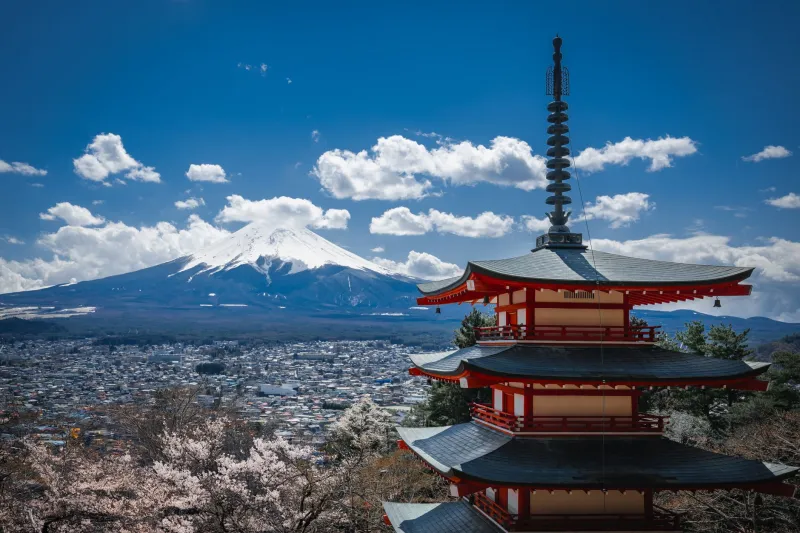
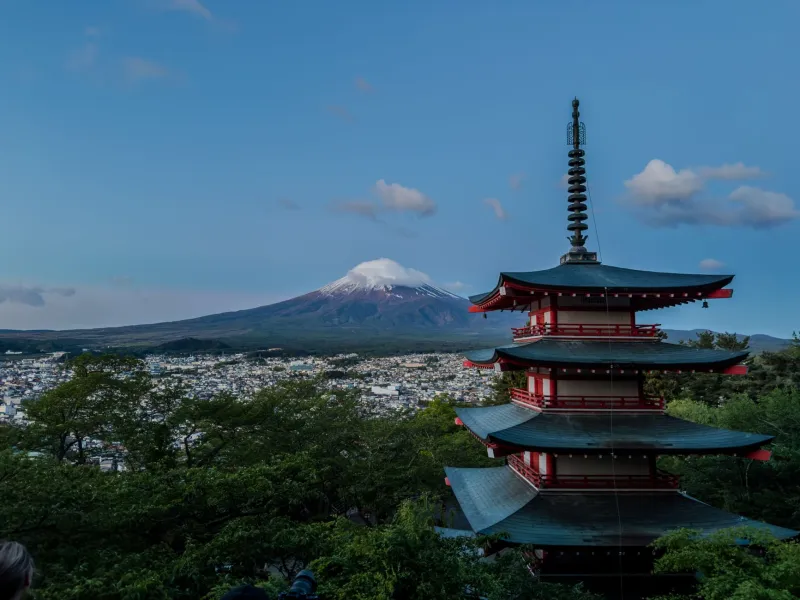
Arakurayama isn't just a pretty hike with a famous pagoda at the top. The experience is layered in a way that sneaks up on you. There's the physical climb — real enough to earn the view. There's the cultural weight of mono no aware, the Japanese philosophy of finding beauty precisely because it won't last. And then there are the blossoms themselves: thousands of yoshino cherry trees in synchronized, fleeting bloom, framing the Chureito Pagoda against the outline of Mount Fuji like something your brain genuinely struggles to file as real.
The combination does something to your nervous system. Researchers who study awe — the specific emotional state triggered by experiences that exceed your mental frameworks — note that it tends to shrink the ego and expand your sense of time. You stop rushing. You stop narrating. You just look.
And then you go home to a Walgreens parking lot and a full notification tray, and your nervous system has absolutely no idea what to do with that.
"I Kept Reaching for Something That Wasn't There"
Amanda, a 34-year-old project manager from Denver, visited Arakurayama solo last spring. She spent two days in the area, climbed the mountain twice — once at dawn, once at dusk — and described the experience as the first time in years she felt genuinely present.
"I got back to Denver and spent like three days just feeling irritated at everything," she said. "Not sad, exactly. More like... everything felt thin. Like I'd been eating incredible food and now everything tasted like cardboard."
She's not alone. Marcus, a 41-year-old high school teacher from Atlanta who visited with a friend, described a similar recalibration. "I kept noticing things that would have never bothered me before. The way everyone at work was in a hurry. How we never just stop and look at anything. I live near a park with cherry trees and I'd never once actually sat under them. That hit me kind of hard."
This is textbook reverse culture shock — but with a twist. Standard reverse culture shock is about missing the foreign place. The Arakurayama version is more specific: it's about suddenly seeing your home environment with new, uncomfortably clear eyes.
The Gap Between There and Here
Part of what makes re-entry after Arakurayama so disorienting is the contrast in pace and intention. Japan's hanami (flower-viewing) culture is built around scheduled, deliberate slowness. People plan weeks in advance to sit under blossoms and do essentially nothing productive. That's not laziness — it's a culturally embedded practice of presence.
American life, by contrast, tends to treat stillness as something you earn after you've finished everything else. Which means you basically never get to it. Coming back from a place where pausing to observe a flower is considered a legitimate use of an afternoon can make your regular schedule feel not just busy, but philosophically misaligned with what you now know is possible.
The mountain doesn't just give you a great memory. It gives you a new reference point. And reference points, once acquired, are very difficult to unacquire.
So What Do You Actually Do With This?
The good news — and there genuinely is some — is that the Arakurayama Effect isn't just a source of post-trip melancholy. It's also information. Here's how returning travelers have learned to work with it rather than against it.
Let the discomfort be a diagnostic. That low-grade irritation when you return isn't a sign that your life is broken. It's your nervous system flagging what it now knows it needs more of: slowness, natural beauty, intentional pausing. Use it like a compass rather than fighting it.
Find your local hanami. You don't need to be in Japan to sit under a flowering tree. Marcus started taking his lunch to that park near his house. "It felt almost embarrassingly small," he said, "but it actually helped." The ritual matters more than the location.
Build micro-pauses into ordinary days. One of the things Arakurayama teaches, almost by accident, is that beauty is available in small doses if you slow down enough to notice it. A ten-minute walk without your phone. Coffee outside instead of at your desk. These aren't substitutes for the mountain, but they're not nothing either.
Plan the return. This sounds obvious, but many travelers who struggle hardest with re-entry are the ones who treat Arakurayama as a one-time experience. Knowing you're going back — even vaguely, even years out — changes the psychological texture of being home. It becomes a pause in the story rather than the end of it.
The Mountain Stays With You (That's the Point)
Amanda eventually stopped reaching for something that wasn't there. Not because the feeling faded entirely, but because she figured out what it was actually asking for.
"I think I was homesick for a version of myself," she said. "The one that existed for those two days on the mountain. And I realized I didn't have to leave her in Japan."
That's probably the most honest framing of the Arakurayama Effect: it doesn't ruin you for ordinary life so much as it shows you that ordinary life has more room in it than you were using. The blossoms fall. The mountain stays. And something in you, if you let it, stays changed.
The re-entry is hard because the experience was real. That's not a problem to solve. It's kind of the whole point.