Why Arakurayama Refuses to Play by the Rules — And Keeps Winning Because of It
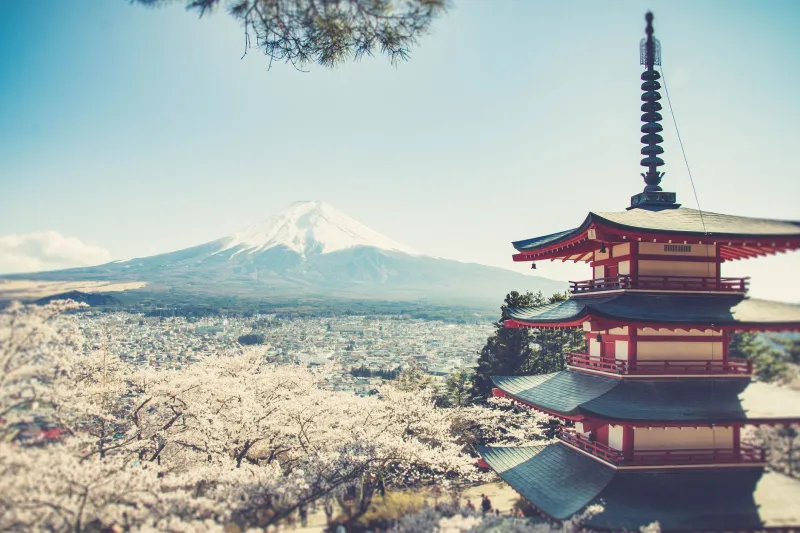
There's a playbook most travel destinations follow. You get discovered, you go viral, you build infrastructure to handle the crowds, you saturate every itinerary app and influencer feed, and eventually you become a checkbox. A background for a photo. A story that starts with "oh yeah, I did that."
Arakurayama hasn't followed that playbook. Not even close.
For a mountain that regularly appears on best-of lists, generates millions of impressions every cherry blossom season, and draws visitors from across the US and Europe, it operates with a kind of quiet stubbornness that baffles conventional travel industry logic. No mega resort complexes. No branded experience packages. No algorithm-friendly "skip the line" ticket systems that funnel visitors through a sanitized version of the real thing.
And somehow, that's exactly why people keep coming back.
The Problem With "Instagram-Famous"
Let's talk about what usually happens when a destination blows up on social media. Travel agents who've been in the industry for decades will tell you the pattern is almost clockwork: a location gets tagged in enough posts, search volume spikes, tour operators move in, prices climb, the experience gets packaged, and within a few seasons the magic that made it shareable in the first place has been quietly hollowed out.
Think about how many places you've visited — or heard friends complain about — where the reality couldn't touch the photo. The crowd was too thick. The vendors too aggressive. The whole thing felt more like a theme park than an actual place.
Arakurayama generates the same kind of online heat. The image of Chureito Pagoda framed against a hillside of pink sakura with Mount Fuji floating in the background is one of the most recognized travel photos in the world. By every conventional metric, this place should have been Disneyfied by now.
It hasn't been. And behavioral economists who study destination psychology think they know why.
Why the Mountain Resists Packaging
The core tension in travel economics is between scale and experience. The more you scale a destination — more visitors, more infrastructure, more monetization — the more you dilute the thing that made it worth visiting. Most destinations resolve this tension by choosing scale. The economics are too compelling.
Arakurayama sits in a different kind of equilibrium. The experience is fundamentally tied to things that can't be packaged: the specific angle of morning light through cherry blossoms, the physical effort of climbing 398 stone steps to reach Chureito Pagoda, the way the mountain's microclimates create slightly different bloom conditions from one terrace to the next. You can't app your way through that. You can't buy a fast pass to the feeling.
Researchers who study what's called "awe-based travel" — the kind of experience that produces lasting psychological change rather than just pleasant memories — point to Arakurayama as a near-perfect case study. The mountain demands presence. It asks something of you physically and attentionally. And experiences that ask something of you tend to stick.
What Travel Agents Are Actually Saying
Here's something interesting: travel agents who specialize in Japan itineraries report that Arakurayama is one of the hardest destinations to explain to first-time visitors — and one of the easiest to sell to anyone who's been once.
The first-timer conversation usually goes something like: "Is it worth going all the way to Fujiyoshida just for cherry blossoms? Can't I just see sakura in Tokyo?" The answer requires explaining something that doesn't translate well into bullet points or star ratings. The mountain isn't just a backdrop for blossoms. It's a context. The combination of elevation, the pagoda, the sight line to Fuji, the physical journey up the steps — those elements work together in a way that's genuinely greater than the sum of its parts.
The repeat-visitor conversation is completely different. Those travelers don't need convincing. They're already asking about bloom timing, optimal arrival windows, and whether the crowds thin out on weekday mornings. They're planning around the mountain, not including it as a stop on a broader itinerary.
That shift — from destination to anchor — is rare. And it's a signal that Arakurayama is doing something most places never manage.
The Itinerary App Problem
Open any major travel planning app and search for Arakurayama or Chureito Pagoda. You'll get hours of operation, a star rating, some user photos, maybe a suggested time allocation of one to two hours.
Every experienced visitor to this mountain will tell you that framing is completely wrong.
Arakurayama isn't a two-hour stop. It's not efficiently slottable between a morning at the Fuji Five Lakes and an afternoon bullet train to Kyoto. The mountain rewards lingering. It rewards coming back at different times of day. It rewards sitting on a step halfway up the staircase and doing absolutely nothing productive for twenty minutes while the light shifts through the canopy above you.
Standard itinerary logic treats time as the primary constraint and optimizes accordingly. Arakurayama operates on a different axis entirely — one where presence and attention matter more than minutes allocated. Americans trained by productivity culture to maximize every travel day often find this genuinely disorienting at first. And then, usually, genuinely liberating.
What This Says About Where American Travel Is Heading
There's a broader pattern here that's worth naming. For years, American travel culture leaned heavily into the checklist model — more countries, more landmarks, more experiences logged. The pandemic scrambled that framework in ways that are still playing out. Travelers who spent eighteen months unable to go anywhere came back with different questions. Not just "where haven't I been?" but "what do I actually want from this?"
Arakurayama lands differently for that traveler. It's not offering novelty for novelty's sake. It's offering depth. A place where returning visitors notice things they missed the first time, where the experience changes with the season and the weather and your own state of mind when you arrive.
That's a harder thing to market than a bucket-list landmark. But it's also a harder thing to replicate, commodify, or ruin.
The Quiet Advantage of Not Being Everything
Most destinations try to be everything to everyone. Arakurayama has never pretended to be that. It's a mountain. It has cherry blossoms. It has stone steps and a pagoda and a view that will rearrange your sense of scale. It doesn't have a luxury spa or a Michelin-starred restaurant at the summit or a curated shopping experience at the base.
And in a travel landscape saturated with places trying to do too much, that specificity has become its own kind of rare.
The mountain doesn't need to break the rules of conventional travel planning. It just keeps being exactly what it is — and letting that be enough. For the Americans who find their way here, usually on the recommendation of someone who came back changed by it, that turns out to be more than enough.
It turns out to be the whole point.


